
How to buy your first fine art photograph: a guide for new collectors
At some point, a photograph stops you. Not because it's beautiful — beautiful photographs are everywhere. Because it says something you can't quite articulate, and you find yourself thinking about it hours later. That moment is where collecting begins.
The rest — editions, certificates, framing — is just the language of the thing. And it's simpler than it looks.
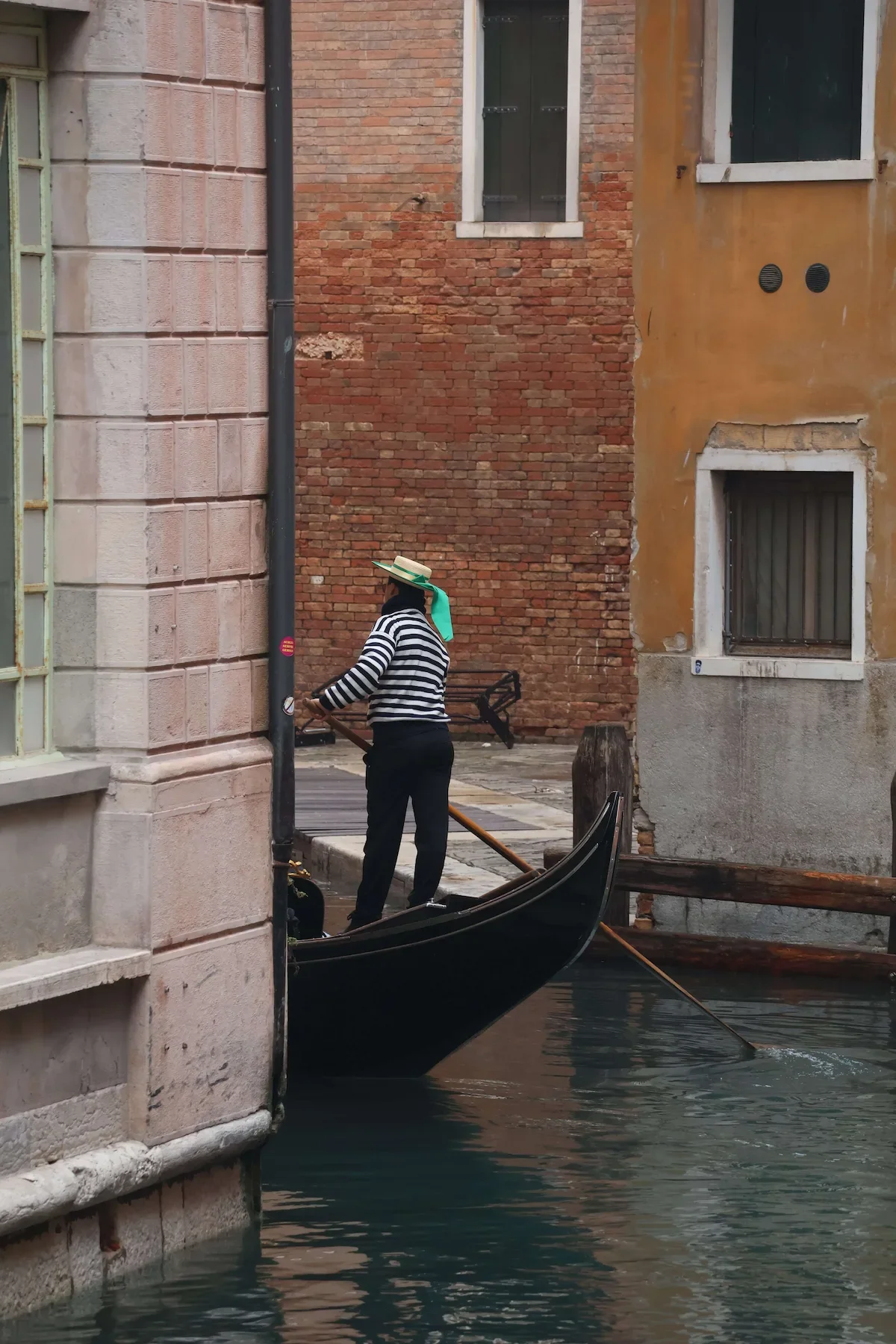
Gondolier navigating narrow Venice canal between aged brick buildings, fine art photography
Fine art photography vs. decorative print — what's the actual difference?
A gondolier navigating a narrow canal. A chair abandoned under a tree. A bandstand buried in snow. None of these images are about what they depict.
Fine art photography is about the decision the artist made — what to include, what to wait for, what to leave out. The subject is incidental. The image is what remains after every unnecessary element was removed.
A decorative print fills a wall. A fine art photograph changes the room it's in.
Take Placed — a single chair positioned beneath the largest tree in an Amsterdam park. Nobody left a chair there by accident. The grass grew around it. The park continued without comment. The photograph doesn't explain what happened. It holds the question open. That's the difference.
What is a limited edition photography print — and why does the number matter?
An edition is a commitment. The artist defines how many prints of an image will ever exist — and holds to it. When the edition closes, it closes. No reprints, no exceptions.
At Pictelier, every work exists in five copies. Not because five is a magic number — because five is enough to reach the collectors it belongs to, and no more. The fifth print placed is the last one.
How to evaluate an edition before you buy
Three questions worth asking: How many prints exist in this edition? Are they individually numbered? Who enforces the limit — the artist, a gallery, or nobody in particular?
Smaller is not automatically better — but it should always be intentional and verifiable.
Fine art photography certificate of authenticity — what it is and what it protects
A Certificate of Authenticity is the document that makes a work collectible rather than decorative. It records the edition number, the total edition size, the artist's signature, and the date.
It travels with the work for its entire life — through resales, insurance claims, estate inventories. There is something specific about holding that physical document alongside a work you've just acquired. It's the moment the transaction ends and the ownership begins.
Without a COA, a print is just a print. With it, it has a history.
Every Pictelier work comes with both a physical and digital certificate. The physical one arrives with the work. The digital one follows it wherever it goes.
Hand framed art prints — why framing is part of the work, not an afterthought
The wrong frame can undo a strong image. Not dramatically — quietly. A proportion slightly off. A material that competes with the photograph. A finish that flattens what the image was doing with light.
Every Pictelier work is hand-framed in Amsterdam before it ships. The framing is chosen for each image specifically — not selected from a catalogue. When the work arrives, it is ready to be placed.
Framing is not a finishing touch. It is the last decision the artist makes about the work.

Single chair beneath large tree in Amsterdam park, summer light, fine art photography
How to buy fine art photography — the inquiry model explained
There is no shopping cart on pictelier.com. When a work catches your attention, you submit an inquiry — your name, the title of the work. Within 24 hours, you receive a personal response: availability, framing options, and a mockup of the work placed in your space.
You might wonder about price. It's a fair question. At Pictelier, price is part of the conversation — not a number posted beside a cart. This isn't evasion. It's the recognition that a work you'll live with for twenty years deserves more context than a checkout page can give it.
The sale happens through a conversation. Every time.
Frequently asked questions
What is a certificate of authenticity for art?
A certificate of authenticity (COA) is a document that verifies a work of art is genuine and records its edition number, artist signature, and provenance. For fine art photography, it confirms how many prints exist and which number you hold. It is essential for resale value, insurance, and long-term collection integrity.
What is a limited edition print in photography?
A limited edition print is a photograph produced in a defined, finite number of copies. Once the edition is complete, no additional prints are made. The edition size, numbering, and enforcement vary by artist and gallery — always verify before acquiring.
How much does fine art photography cost?
Fine art photography ranges widely depending on the artist, edition size, print dimensions, and framing. At Pictelier, pricing is provided directly through the inquiry process — contact the atelier for availability and details on any specific work.
What is the difference between a fine art print and a poster?
A poster is produced in unlimited quantities on standard paper, typically for decoration. A fine art print is produced in a controlled edition on archival-grade materials, with a certificate of authenticity, and is considered a collectible work. The distinction matters for value, longevity, and intent.
The first time you buy fine art photography, you are not decorating a room. You are deciding what you want to think about every morning. That's worth slowing down for.
