
What is fine art street photography?
There is a moment that exists only once. A shadow at the right angle. A crowd that forms and dissolves in ten seconds. A monument that suddenly means something it didn't mean the day before.
Fine art street photography is the practice of recognizing that moment — and deciding it deserves to last.
It is not reportage. It is not documentation. It is not travel photography with a better eye. The photographer is not recording the world. They are making a claim about it — about what this moment means, about why it deserves to outlast the second it occupied.
That claim is what separates a print worth collecting from an image worth scrolling past. The rest of this article is about understanding the difference.
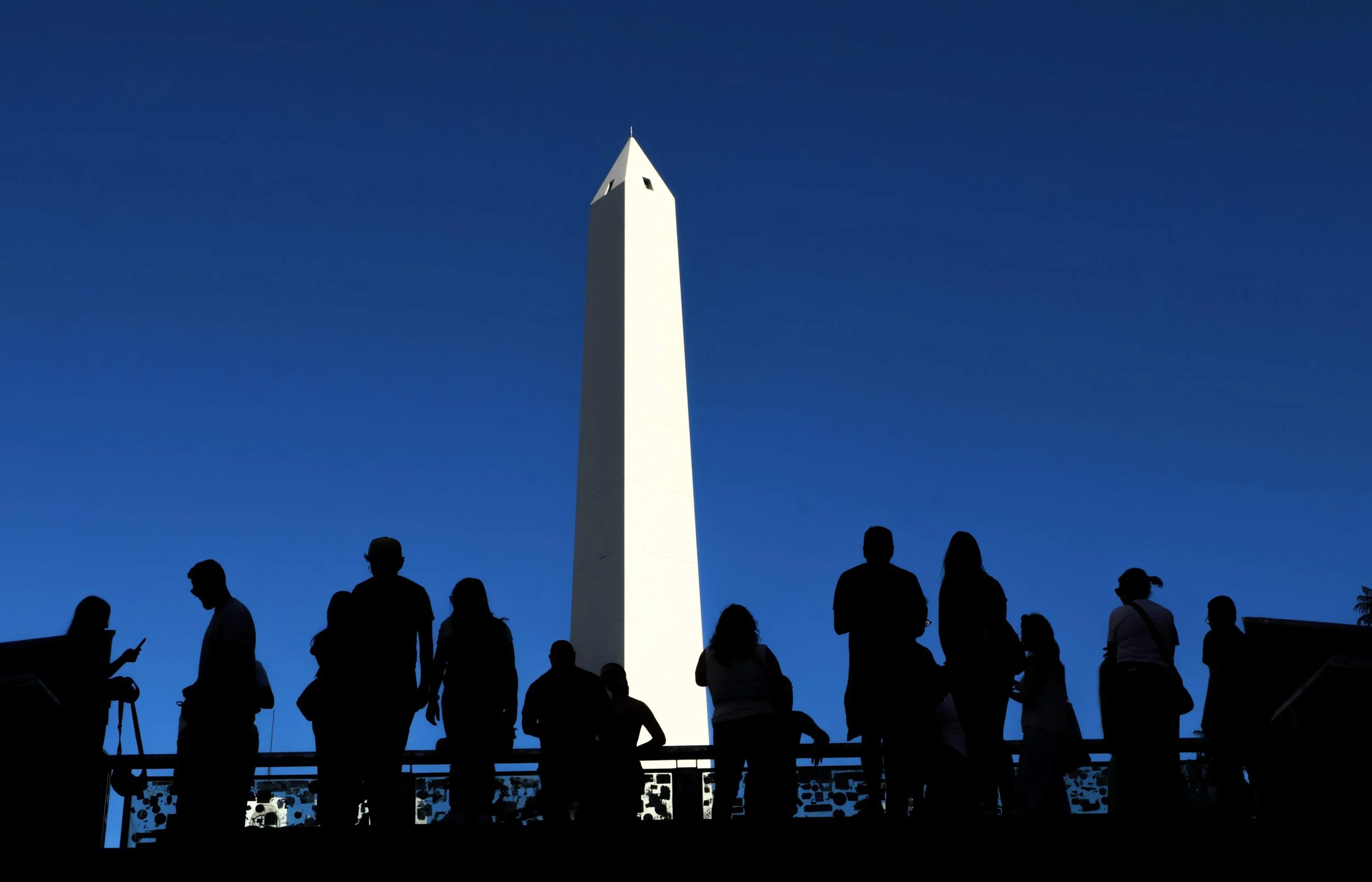
Silhouettes of people against white obelisk monument under deep blue sky, Buenos Aires fine art street photography
What makes street photography fine art — and not just a good photograph?
The word 'fine art' is not about quality. It is about intention.
A documentary photographer captures what happens. A fine art photographer decides what it means. The difference lives in every decision made before and after the shutter: where to stand, what to include, what to leave out, how light and shadow divide the frame, whether the image holds something worth returning to.
Fine art street photography shares its DNA with painting. The same questions that Hopper asked in his canvases — solitude, visibility, the weight of an ordinary moment — appear in fine art photography made on a street corner in Buenos Aires or a narrow canal in Venice. The setting is documentary. The reading is not.
The test is simple: does the image still matter after the moment has passed?
If the answer is yes, you are looking at fine art. If you're not sure — keep looking. The answer tends to arrive on its own.

Ancient stone bell tower framed between narrow Venice building facades, urban fine art street photography
The decisive moment — and the object it becomes
Henri Cartier-Bresson called it the decisive moment: the precise instant when form, content, and meaning align. Fine art street photography is built on this idea. But collecting it requires understanding what happens after that moment.
A fine art print is not the moment itself. It is the interpretation of the moment — edited, printed on archival paper, framed by hand, and issued in an edition small enough that it retains meaning. The print is where the photograph stops being an image and becomes an object.
A room that receives this object changes. Not dramatically — quietly. The way a room changes when something permanent enters it.
Which raises the question: what kind of room deserves that object?
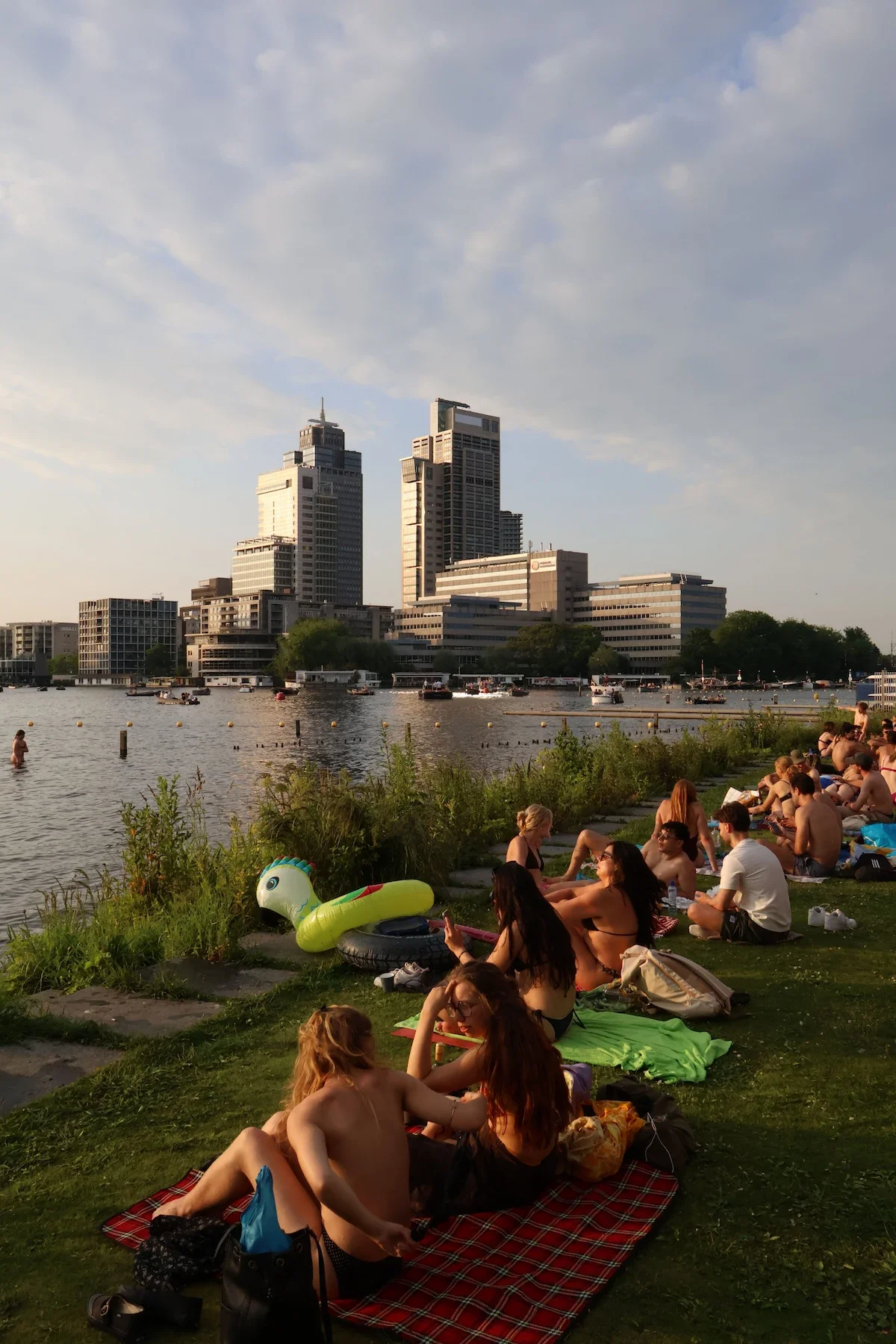
Young people relaxing on riverbank with inflatable toy and Amsterdam skyline behind, contemporary urban fine art photography
Why collectors keep returning to street photography
Collectors who come to fine art photography for the first time often arrive through landscapes or abstracts. Street photography tends to find them later — after they have lived with art long enough to want something that talks back.
A landscape is a place. A street photograph is an argument. It says: this is what it felt like to be alive in this city, at this hour, on this particular day. That argument either lands or it doesn't. When it lands, it is difficult to look away.
Think of a white monument against cobalt blue. A row of silhouettes — no faces, no names — leaning against a railing. The city has been there longer than any of them. It will be there after. That image does not explain itself. It asks you to place yourself in it. That is the invitation fine art street photography makes — and the reason collectors return to it long after the purchase is complete.
Fine art street photography tends to attract people who move through cities with their eyes open — who notice the light shifting on a building, who stop on a bridge without knowing exactly why. The images resonate because they confirm something the collector already knew but had not yet seen on a wall
"I didn't buy it because it was beautiful. I bought it because I couldn't stop thinking about it." — E.M., New York
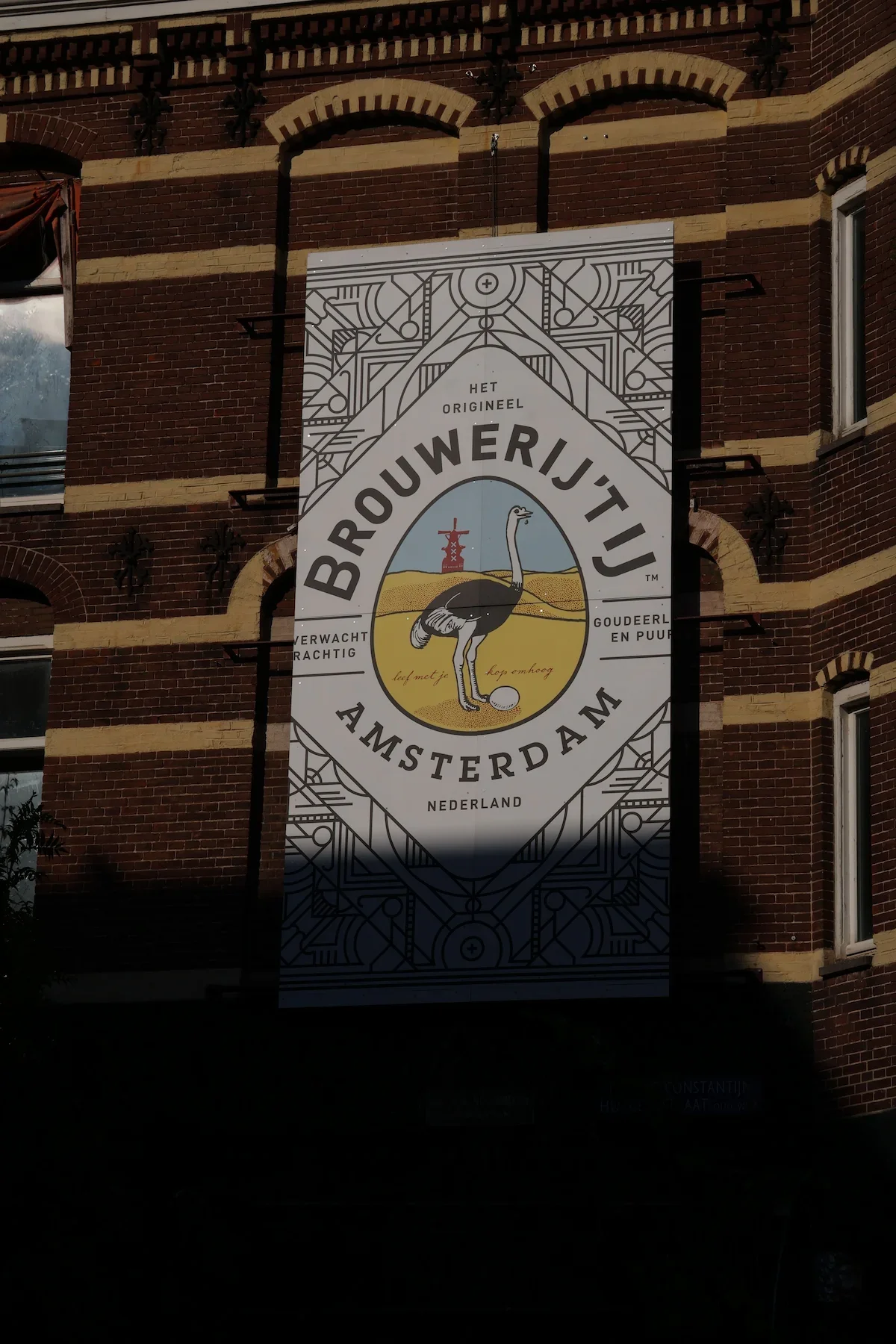
Large graphic brewery mural on red brick Amsterdam building facade, urban street fine art photography
How to look — and what most people miss
The subject is never the point. A gondolier, a monument, a crowd of silhouettes: these are the occasion for the photograph. Not its meaning.
What carries the meaning is everything else. Where the eye enters the frame. Where it rests. What the light does to the subject that the subject could not do alone. Whether the foreground and background are in tension or in agreement — and what that tension implies about the world outside the frame.
The best fine art street photographs are arguments disguised as observations. They look effortless. They are not. And they reveal themselves differently on the tenth viewing than on the first.
That is the quality worth paying attention to — not the image that impresses immediately, but the one that keeps producing.
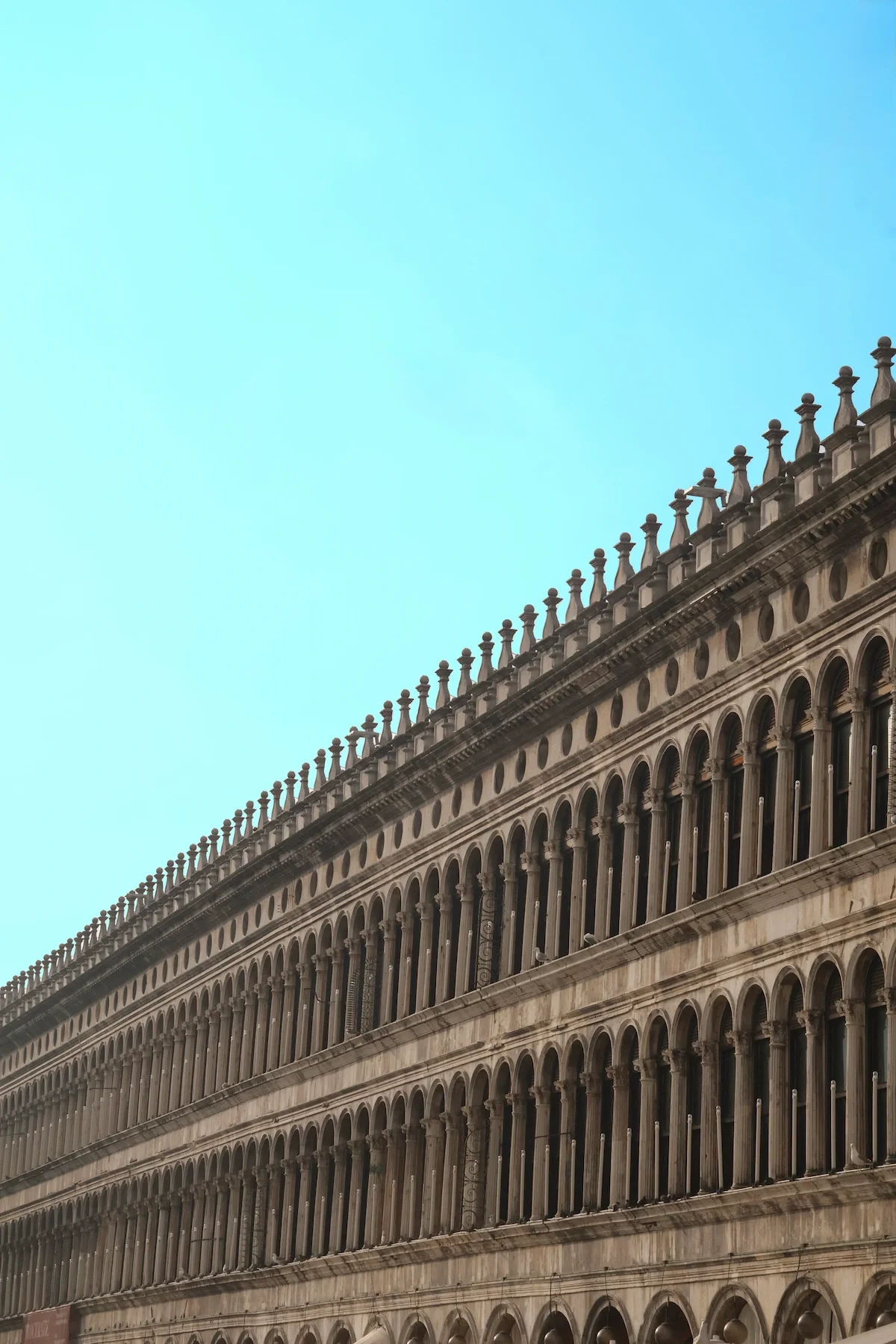
Rows of stone arches and ornamental finials on historic Venice palace facade against clear blue sky, fine art street photography
Edition size — why it is an ethical decision, not a marketing one
Street photography presents a particular challenge for collectors: the same moment can be printed infinitely. A digital file has no natural limit. This is why edition size is not a marketing decision in fine art photography. It is an ethical one.
When a work is issued as an edition of 5, the decision is final. The photographer is committing to the idea that this image belongs in five places in the world — no more. The fifth collector to place a print is closing something. That is a different kind of ownership than buying a reproduction.
For the collector, this matters beyond scarcity. It shapes the relationship between the print and the space it enters. A work that exists in five places in the world asks more of the room it hangs in. It carries the weight of a decision.
Which is another way of saying: acquiring a fine art street photograph is not the same as decorating a wall. It is a position.
Frequently asked questions
What is the difference between street photography and fine art street photography?
Street photography is a genre — images made in public spaces, often candid, often documentary. Fine art street photography is a subset defined by intention: the image is made to be collected, printed on archival materials, issued in a numbered edition, and treated as a work of art with lasting value. Not all street photographs are fine art. The ones that are tend to be obvious — they hold something that survives the moment.
Can street photography be collected like traditional art?
Yes, and serious collectors increasingly treat it that way. The conditions are the same as any collectable work: a numbered edition, a certificate of authenticity, archival materials, and a committed artist. A fine art street photograph issued in an edition of 5, hand-framed, and accompanied by a signed certificate is as collectable as a painting of the same scale.
How do I know if a fine art street photograph is worth collecting?
The question to ask is not whether you like it — though that matters. The question is whether it still holds something after you have looked at it for a long time. A decorative image releases its meaning quickly. A fine art photograph tends to produce new readings. If you find yourself still looking after five minutes, that is not an accident.
What is an archival fine art print?
An archival print is produced with materials rated to resist fading and deterioration for decades or longer. This includes pigment-based inks and acid-free paper or aluminium substrates. Archival quality is the baseline for any print intended to be collected — it is the difference between a work that lasts and one that changes in the frame.
How do I acquire a fine art street photograph from Pictelier?
There is no shopping cart. When a work catches your attention, you submit an inquiry — your name and the title of the work. Within 24 hours, the atelier responds with availability, framing options, and a custom mockup of the work in your space. The full process is covered in the guide to how to buy your first fine art photograph.
