
What is fine art photography?
Most photographs record. They document a place, a moment, a face. They confirm that something happened — that someone was there, that the light was that colour, that the crowd gathered at that hour.
Fine art photography does something different. It does not record the world. It makes a claim about it.
The claim might be about time — that this particular second deserves to outlast all the seconds around it. It might be about scale — that a single figure on a coastline tells us something about the size of everything else. It might be about silence — that an empty park in winter, stripped of its purpose, is more honest than it ever is in summer.
Fine art photography is a practice with a history, a market, and a set of standards that distinguish it from every other form of photography. This is what that means — and why it matters to collectors.
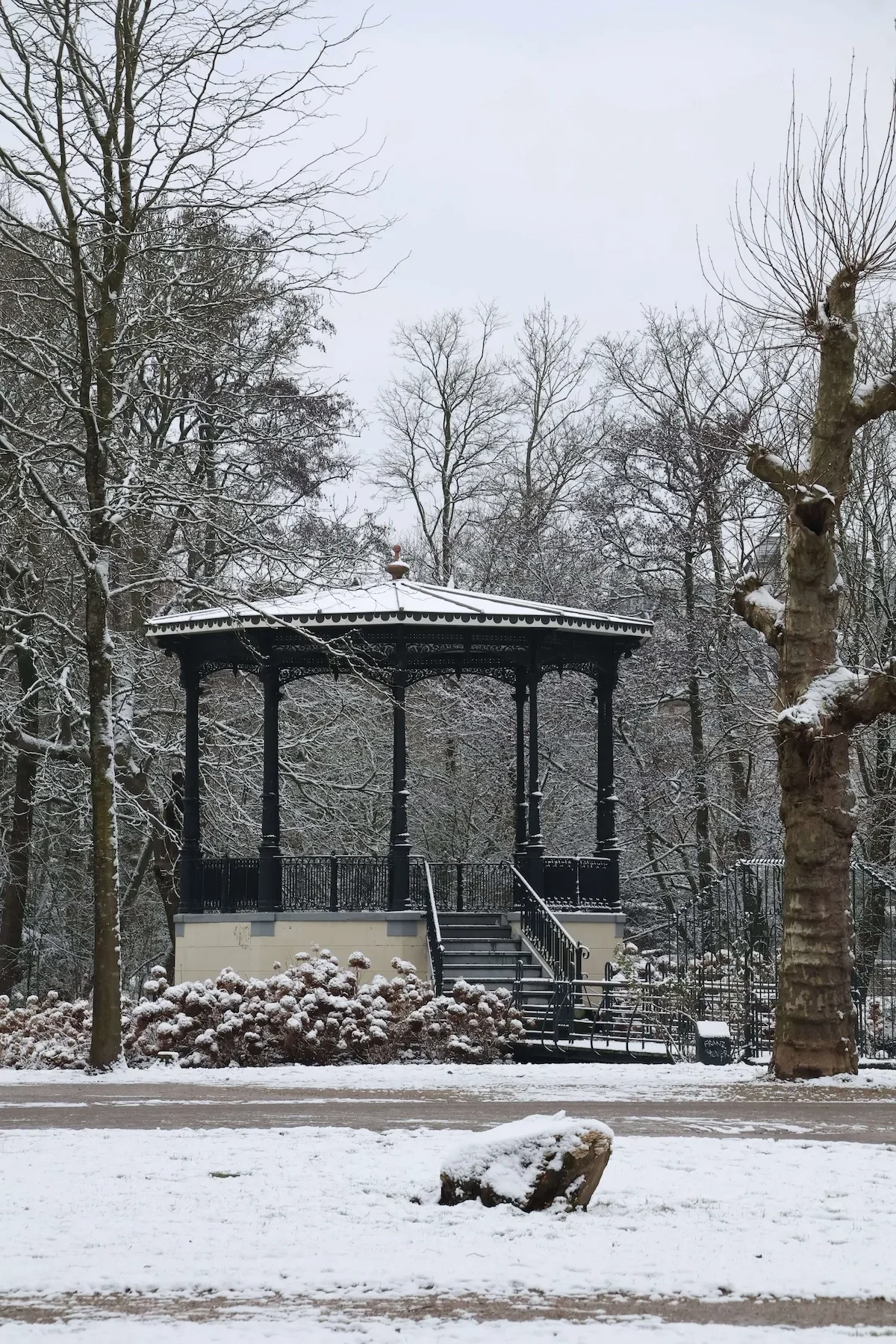
Snow-covered Victorian bandstand Amsterdam winter park fine art photography
Fine art photography — a definition that actually holds
The term gets used loosely. Galleries use it. Print shops use it. Smartphone filter apps have started using it. A working definition is overdue.
Fine art photography is photography made with a singular artistic intention — where every decision, from composition to printing to framing, serves that intention rather than a commercial or documentary purpose.
The photographer is not hired to capture an event. They are not illustrating a text. They are not producing a product image. They are making a statement — and every element of the photograph is in service of that statement.
Fine art photography is not defined by its subject. It is defined by its intention.
A street in Venice can be tourism photography or fine art photography. The difference is not the camera, not the light, not even the composition. It is whether the photographer made a claim — whether the image argues for something beyond its own surface.
Two photographers stand in the same place at the same hour. One is documenting. The other is deciding. The photographs they make will look identical to a casual eye. To a collector, they are completely different objects.
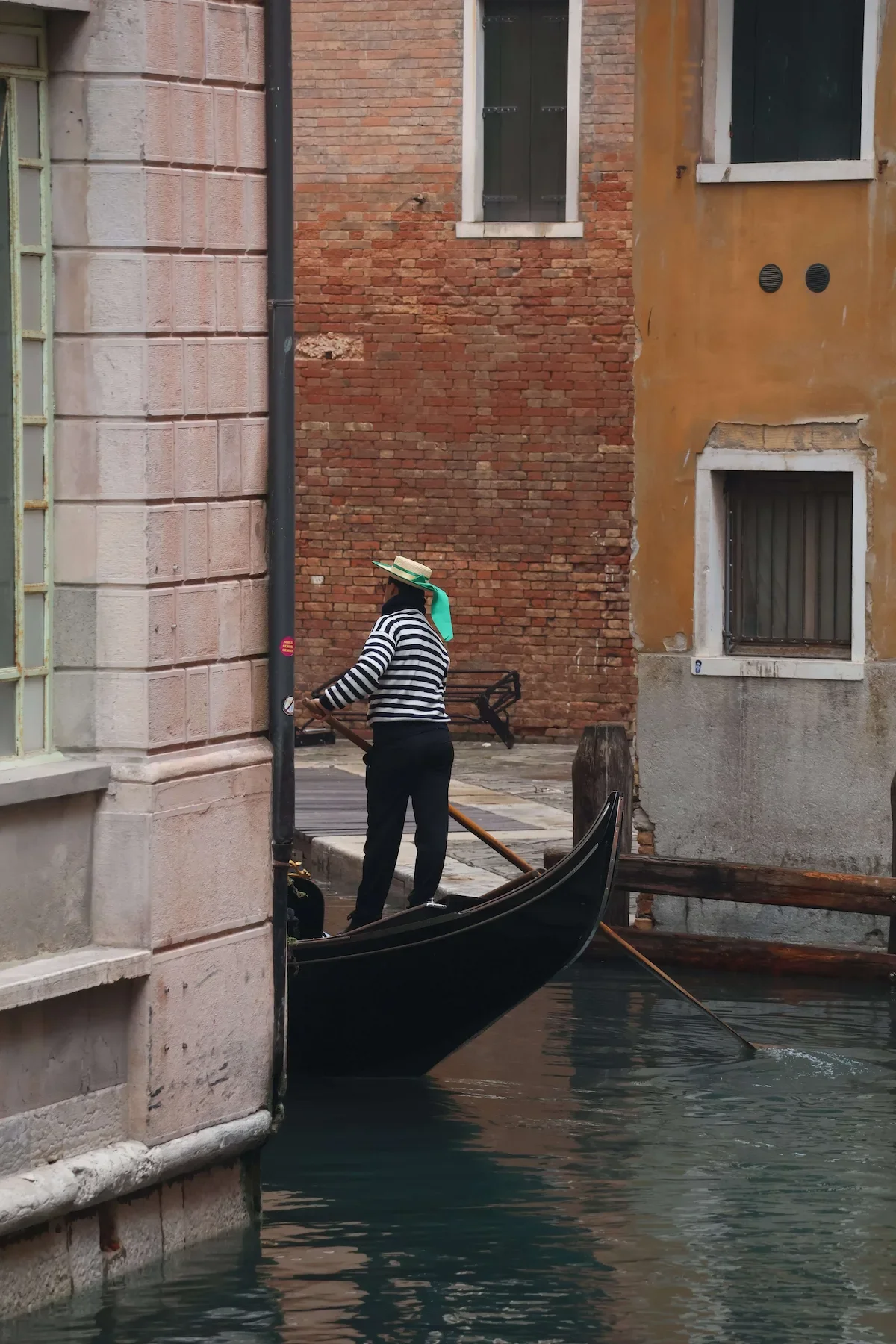
Gondolier navigating narrow Venice canal between aged brick buildings fine art photography
Is photography considered fine art? The longer argument
The question used to be controversial. In the nineteenth century, photography was dismissed as mechanical reproduction — a machine making copies of reality, not an artist making decisions about it.
Alfred Stieglitz spent decades arguing otherwise. Not by defending photography in the abstract, but by making photographs that could not be dismissed — images so deliberately composed, so precisely timed, so clearly intentional that the argument against them became impossible to sustain.
The question is not whether photography is art. It is whether this photograph is.
By the mid-twentieth century, photography had entered museum collections, auction houses, and the permanent holdings of institutions that had previously only considered painting and sculpture. It was not a concession — it was a recognition that the medium was capable of the same range of intention, ambiguity, and meaning as any other.
Today the question is settled. What remains unsettled — and more interesting — is the question of which photographs qualify. That is not a question with a formula. It requires looking.
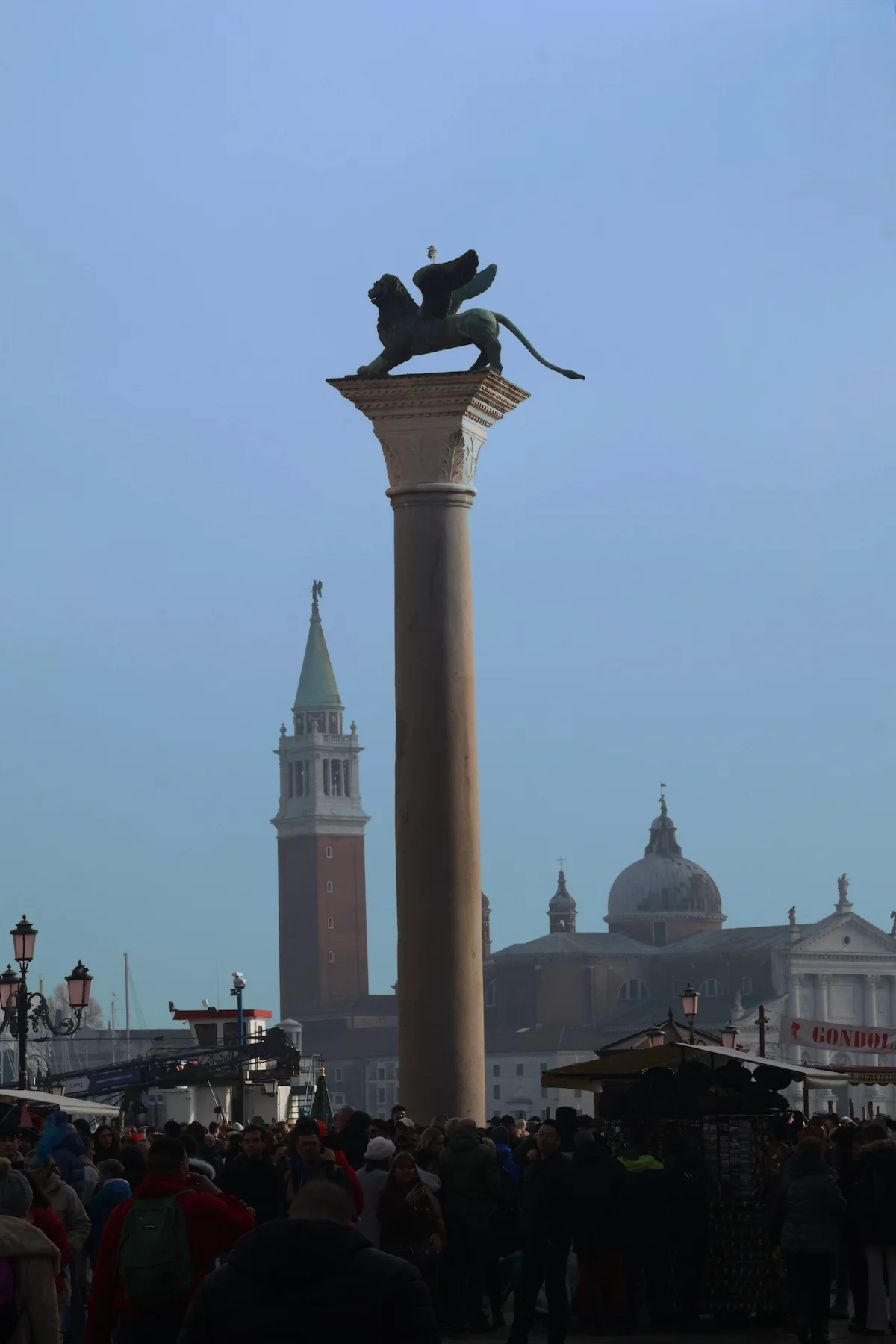
Winged Lion of St Mark column above Venice crowd fine art photography
What makes a photograph fine art — the three things that matter
1. Intention
The photograph was made to exist as an autonomous object, not to serve another purpose. It is not illustrating an article, advertising a product, or documenting an event. It was made because the photographer saw something worth making permanent.
This sounds simple. It is not. Most photographs, even technically accomplished ones, are made in service of something else. Fine art photography is made in service of itself.
2. Singularity
The image is the result of a specific decision, at a specific moment, by a specific person. It cannot be reproduced by standing in the same place with the same camera — the light has changed, the subject has moved, the second has passed.
This is what separates a fine art photograph from a technically accomplished photograph. Technical accomplishment can be repeated. The decision that produced this specific image cannot.
3. Edition
In fine art photography, the edition is the commitment. The photographer defines how many prints of this image will exist in the world — and holds to that number permanently.
A small edition is not automatically better than a larger one. But it should always be intentional, documented, and enforced. An edition of five means five collectors will ever own this image. When the fifth print is placed, the image is closed. What exists in the world is everything that will ever exist.
At Pictelier, every work exists in five copies. The decision is not about scarcity as strategy — it is about the relationship between an image and the number of walls it can honestly occupy.
Fine art photography prints — what they are and why they are not reproductions
A fine art photography print is not a reproduction. It is the work.
This distinction matters. A reproduction is a copy of something that exists elsewhere — a poster of a painting, a postcard of a sculpture. The original is the painting. The reproduction is secondary.
In fine art photography, the print is the original. There is no higher form of the work. The negative or digital file is not the artwork — it is the potential for the artwork. The artwork is the print, on a specific paper, at a specific size, framed in a specific way, numbered within a specific edition.
This is why the printing process matters as much as the photograph itself. Fine art photography prints are produced on archival paper — paper engineered to resist fading, yellowing, and degradation for over a century. The ink is pigment-based rather than dye-based, chosen for longevity rather than cost.
Every Pictelier print is made this way. Not because archival materials are a luxury — because they are the minimum standard for something intended to last.
The framing is chosen for each image individually. Not standardised across a catalogue, not selected from a generic range. The frame is the last decision made about the work before it leaves the atelier. It is part of the work.
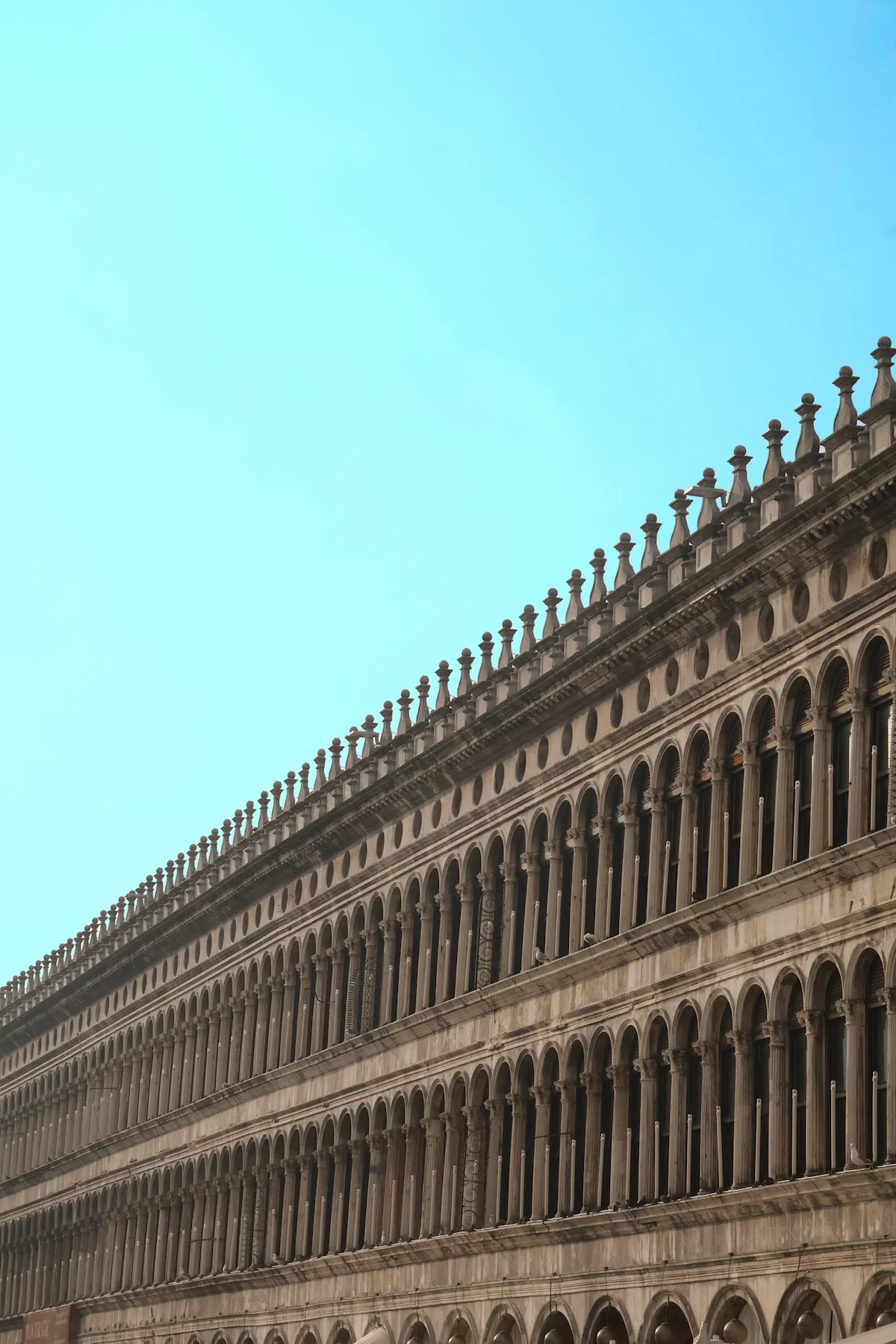
Procuratie Vecchie arcade repetition diagonal perspective Venice fine art photography
How to look at fine art photography — what most people miss
The first look is instinctive. Something stops you or it does not. This instinct is worth trusting — but it is only the beginning.
The second look is where fine art photography separates itself from everything else. Ask: what decision did the photographer make? Not what did they photograph — what did they decide? Why this moment and not the one before it? Why this angle and not the obvious one? What is present in the frame that most people would have excluded? What is absent that most people would have included?
The works that hold up over years are the ones that keep producing. Every time you look, there is something else — a tension you did not notice, a detail that changes the reading of the whole, a question the image is asking that you had not heard before.
A fine art photograph is not a decoration that fades into the wall. It is an object that continues to work on the room it inhabits — slowly, and over years. Collectors who have lived with a work for a decade consistently report that the image still has something to say. That is the standard worth holding.
The test is simple: does the image still matter after the moment has passed? Not the image that impresses immediately — the one that keeps asking questions.
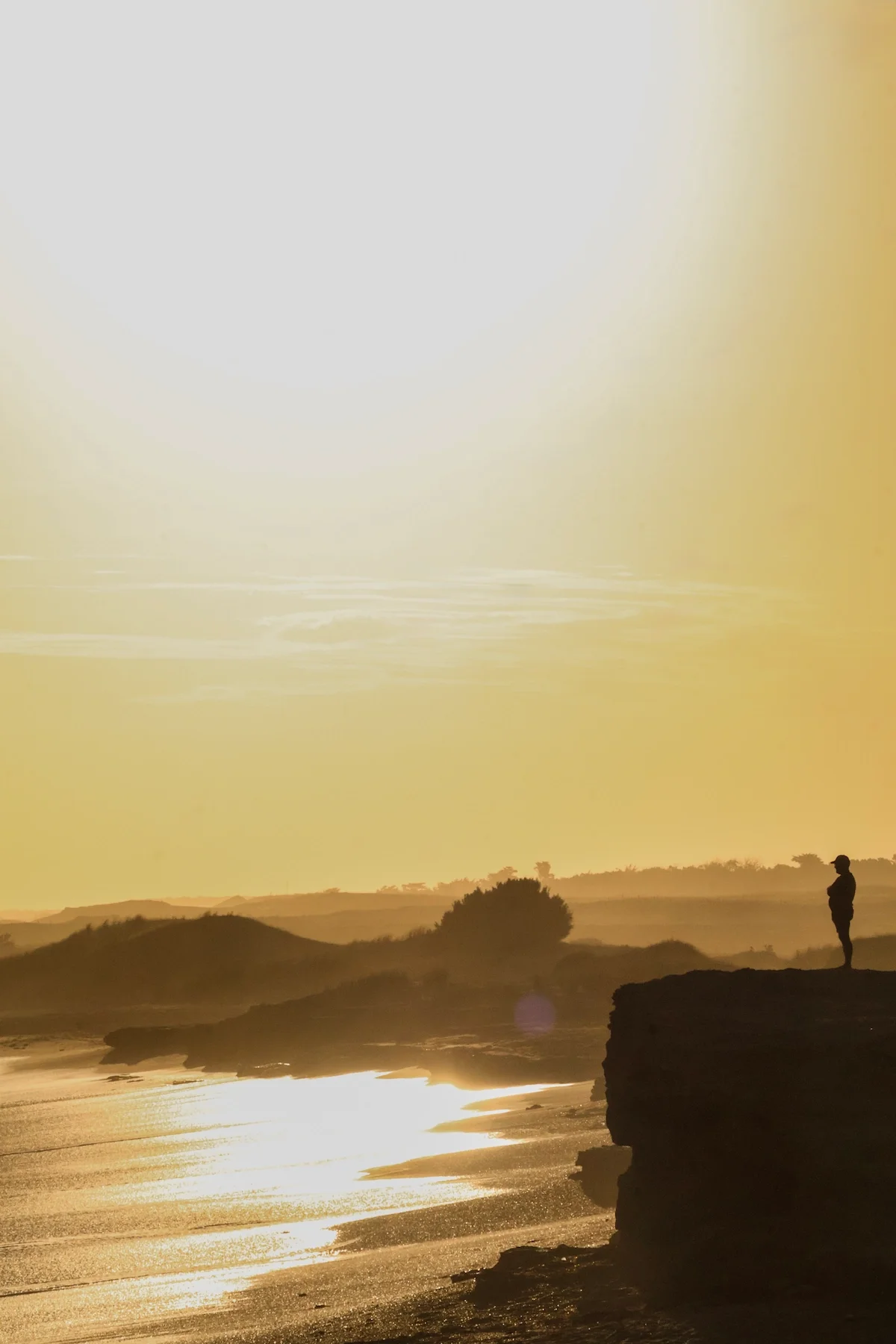
Solitary figure on coastal rock at golden sunset fine art photography
Fine art photography from Amsterdam — why place matters
Fine art photography does not belong to any single city. But the city where an artist works shapes what they see, what they return to, and what they decide is worth making permanent.
Amsterdam is a city that rewards careful looking. Its logic is horizontal — canals, bridges, bicycles, the flatness of the light in winter. The drama is never architectural. It is accumulated — in the density of eight hundred thousand bicycles parked along a canal, in the silence of a snow-covered park at midday, in the way a Victorian bandstand holds its shape against a February sky.
Venice asks different questions. It is a city that has been photographed more than almost any other — which means the challenge is not to find it, but to find it again. To see past the image of Venice that already exists in every viewer's head and make a photograph that is specific, singular, and irreducible to the postcard.
The works in the Pictelier collection move between these cities and others — Buenos Aires, the Mediterranean coast — but the approach does not change. Every image is made from the same position: not documenting a place, but deciding what that place means.
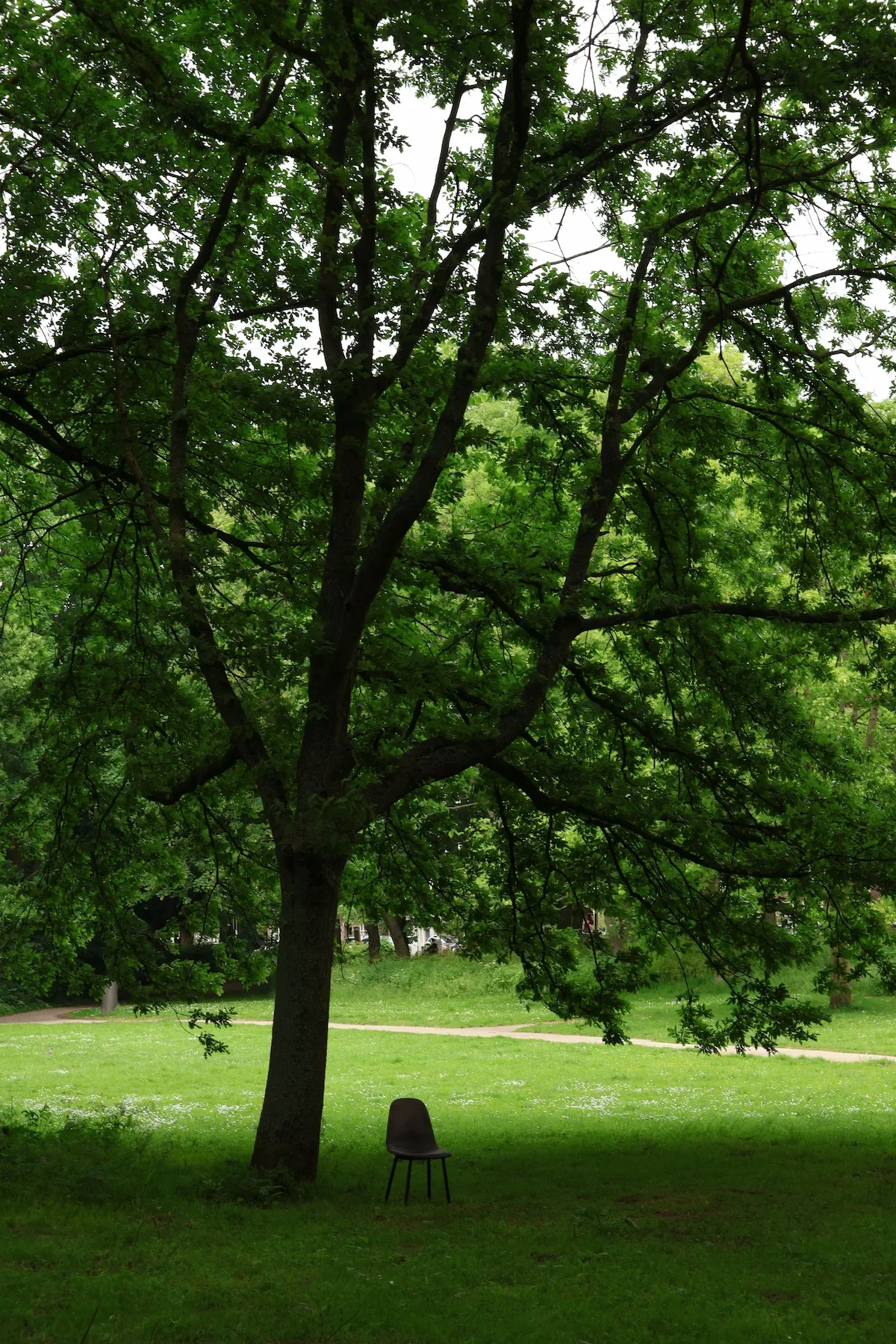
Single chair beneath large tree Amsterdam park summer light fine art photography
Collecting fine art photography — where to start
The first question is not which photograph. The first question is: what do I want to live with?
Fine art photography is not acquired the way furniture is acquired — by matching dimensions and colours to a room. It is acquired because the work says something you want present in your daily life. Because it asks a question you are still answering. Because it makes you stop, and keeps making you stop.
A few principles for first-time collectors:
Buy the work that will not leave your head. Not the one that impressed you in the moment — the one you kept returning to. That persistent quality is the only reliable signal.
Understand the edition before you commit. How many prints exist? Are they individually numbered? What documentation comes with the work? A serious studio answers these questions without hesitation.
Consider the framing as part of the work. How a fine art photograph is framed changes what it is. The wrong frame quietly undoes a strong image. The right one completes it.
Ask to see it in your space. Before a Pictelier work is confirmed, a custom mockup is prepared — the specific image, scaled to your dimensions, placed on your wall. This is not a sales technique. It is the only honest way to make the decision.
For a complete guide to the acquisition process — editions, certificates, framing, and what to expect — read our guide to buying your first fine art photograph.
For a deeper look at one specific strand of this practice, read our guide to fine art street photography — what it is, and what separates an image from a work of art.

Dense rows of parked bicycles along Amsterdam canal urban fine art photography
Fine art photography prints — the Pictelier collection
The Pictelier collection spans forty-three works across Amsterdam, Venice, Buenos Aires, and the Mediterranean coast. Each exists in five copies worldwide — hand-framed in Amsterdam, numbered, signed, and issued with a physical and digital Certificate of Authenticity.
The works range from urban studies to coastal landscapes, from intimate street photography to architectural abstraction. What they share is the same standard: each was made because the photographer made a decision, and that decision produced something worth making permanent.
No prices are listed on the site. Every acquisition begins with a conversation — a personal response within 24 hours, a custom mockup for the collector's specific wall, and a framing discussion before anything is confirmed.
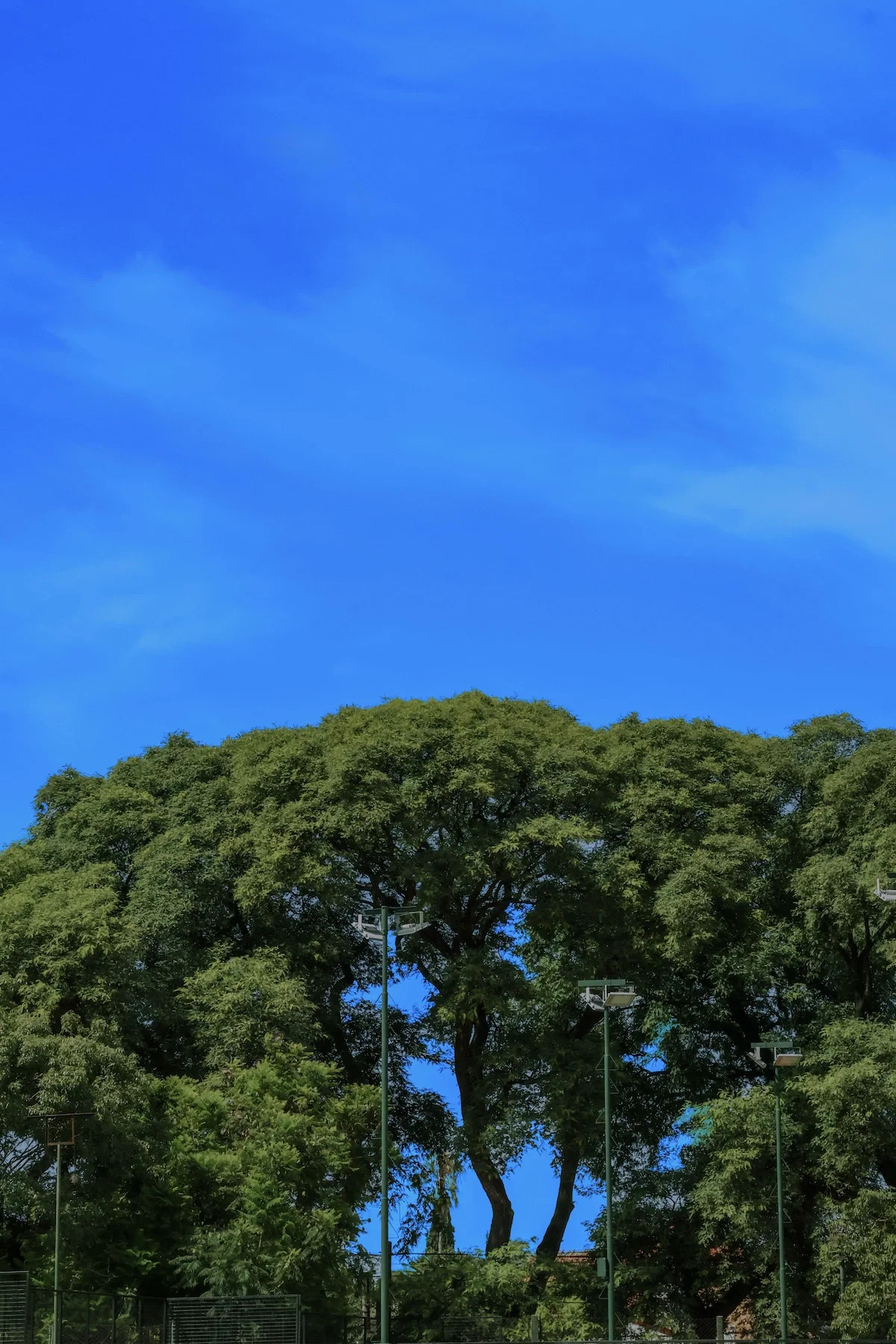
Monumental green tree canopy against vivid blue sky botanical fine art photography
Frequently asked questions
What is fine art photography?
Fine art photography is photography made with a singular artistic intention — where every decision serves that intention rather than a commercial or documentary purpose. It is not defined by its subject but by the claim the photographer makes about the world.
Is photography considered fine art?
Yes. Photography has been collected by major museums and institutions for over a century. The question is not whether photography qualifies as fine art — it is whether a specific photograph does. That depends on intention, singularity, and edition.
What makes a photograph fine art?
Three things: intention (made to exist as an autonomous object), singularity (the result of a specific unrepeatable decision), and edition (the number of prints is defined, documented, and permanently enforced).
What is a fine art photography print?
A fine art photography print is not a reproduction — it is the work itself. Produced on archival paper designed to last over a century, in a defined edition, framed specifically for the image, and documented with a Certificate of Authenticity.
What is the difference between fine art photography and regular photography?
Regular photography serves a purpose outside itself — commercial, documentary, editorial. Fine art photography exists for its own sake. Every decision after the shutter closes honours that intention: archival printing, individual framing, documented edition, certificate of authenticity.
How do I start collecting fine art photography?
Start with the work that will not leave your head. Understand the edition. Ask about the framing. Request to see the work in your space before committing. The acquisition should be a conversation, not a transaction.
