
Certificate of Authenticity for Art — What It Means
Certificate of authenticity for art — what it is and why it matters
Most collectors encounter the term early. Fewer understand what the document actually does — not on the day of acquisition, but over the years that follow.
A certificate of authenticity is not a formality. It is the record that makes a work traceable, insurable, and transferable across the decades it will spend on walls and in collections. This is what it contains, what it protects, and what to look for before you acquire.

Snow-covered Victorian bandstand Amsterdam winter park, limited edition fine art print, Edition of 5
What is a certificate of authenticity for art?
A certificate of authenticity — COA — is a document that verifies the identity and provenance of a specific work. For fine art photography, it answers three questions that matter to collectors: Is this the original? Which copy is this? How many exist?
It records the title of the work, the edition number and total edition size, the artist's signature, and the details of production. It is signed at the atelier and issued at the moment of acquisition. From that point, it belongs to the work — not to the collector, not to the atelier, but to the specific object it describes.
A COA does not make a work valuable. It makes its value verifiable.
The distinction matters. A strong photograph without documentation is difficult to insure accurately, harder to resell with confidence, and easier to question. The same photograph with a rigorous certificate is a traceable object with a clear history. The image is what draws a collector in. The COA is what makes the acquisition hold up over time.
What a certificate of authenticity should contain
Not all COAs are equal. The document is only as useful as the information it records — and that information needs to be specific enough to be verified.
A complete certificate for a fine art photography print includes:
The title of the work, exactly as it appears in the edition record
The edition number and total edition size (e.g. 3/5 — not "limited edition")
The date of production
The print dimensions and medium (paper type, ink type)
The artist's handwritten signature
The name and contact details of the issuing atelier or studio
A unique reference number or seal tied to that specific print
What the certificate should not contain is vague language. "One of a limited series" is not a COA. "Edition 3/5, archival pigment print on Hahnemühle Photo Rag, 60 x 90 cm" is a COA. The difference is the difference between a claim and a record.
Without a COA, a print is just a print. With it, it has a provenance.
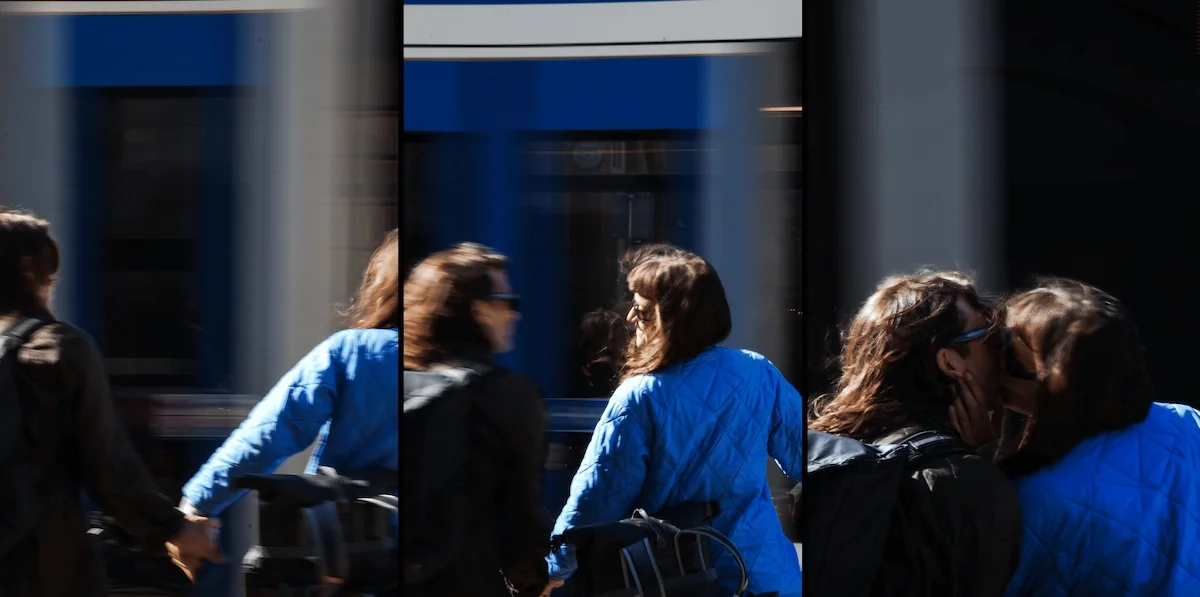
Three-panel street photography triptych Amsterdam, numbered fine art print certificate of authenticity
What the Pictelier certificate contains
Most articles about certificates of authenticity describe an abstract document. This one exists.
Every Pictelier work is issued with two certificates at the moment of acquisition: a physical document and a digital record. The physical certificate is printed on archival paper and lists the title of the work, the edition number against the closed edition of five, the dimensions and medium of the specific print, the date of production, and the atelier seal. It carries the artist's handwritten signature — not a facsimile, not a stamp. The same hand that made the decision behind the image signs the document that records it.
The digital certificate is registered independently, linked to a unique identifier for that specific print. It does not live on a platform that can be shut down or migrated away. It remains accessible regardless of where the work travels or how many times it changes hands.
Every detail is fixed at the moment of issue. Nothing changes after that.
This matters for a specific reason: a COA issued after the fact, or updated to reflect new information, is not a COA. It is a revision. The authenticity of the document depends on it being a contemporaneous record — made when the print was made, describing exactly what existed at that moment. At Pictelier, both certificates are issued together, at acquisition, and the record is closed.

Neo-Gothic church tower Amsterdam before fire destruction, limited edition fine art photography print signed numbered
Why the edition number matters — not just the edition size
Collectors often focus on how small the edition is. That matters. But the number within the edition matters just as much — and is less often discussed.
In a closed edition of five, each print is a distinct object. Edition 1/5 was placed first. Edition 5/5 closed the series permanently. Neither is more valuable than the other by default — but they have different relationships to the history of the work, and that relationship is recorded only in the certificate.
The edition number is not a ranking. It is a record.
When a work eventually changes hands — through resale, inheritance, or donation — the certificate is what allows the new owner to understand exactly what they hold. Without that document, the edition number on the print is an unsupported claim. With it, it is a verifiable fact.
Physical vs. digital — why both matter
A physical certificate can be damaged, lost, or separated from the work over decades of moves, resales, and storage. A digital record can be copied without a chain of custody, or exist on a platform that no longer operates in ten years.
The answer is not to choose between them. It is to maintain both, consistently, with a clear link between each record and the specific print it describes.
The physical document and the digital record are not alternatives. They are the same commitment in two forms.
At Pictelier, both are issued at the moment of acquisition. The physical certificate arrives with the work. The digital record is registered independently and remains accessible regardless of where the work travels. Neither replaces the other — together, they close the loop.

Covered gondolas moored Venice lagoon winter haze, fine art photography print certificate of authenticity
How to verify a certificate of authenticity before acquiring a work
The certificate is only as trustworthy as the atelier or artist who issued it. Three checks are worth making before acquiring any certificated work.
The first: can you contact the issuing atelier directly to confirm the edition record? Reputable studios maintain records of every print issued. A studio that cannot confirm a specific edition number on request is one that may not have enforced the edition in the first place.
The second: does every detail on the certificate match the work itself — title, dimensions, edition number, paper? A certificate that describes a 60 x 90 cm print accompanying a 50 x 75 cm work is not a certificate. It is a mismatch.
The third: is the signature consistent with documented examples of the artist's signature? This matters most in the secondary market, where a work may have changed hands several times. If the answer to any of these questions is unclear, that is information. A serious atelier answers these questions without hesitation.
Does a certificate of authenticity affect the value of a work?
Not directly. The certificate does not add value that was not already present in the work itself.
What it does is protect value that exists — and make that value legible to insurers, auction houses, estate administrators, and future collectors. A work with a rigorous COA can be accurately valued, insured for its correct replacement cost, and resold without dispute about its provenance. A work without documentation creates uncertainty at every step of that process.
Over the life of a serious collection, the difference is significant. The COA is not what makes a work worth acquiring. It is what makes the acquisition worth keeping.

Single chair under tree Amsterdam park summer, hand-framed fine art photography print certificate
Frequently asked questions
What is a certificate of authenticity for art?
A certificate of authenticity (COA) is a document that verifies the identity and provenance of a specific work of art. For fine art photography, it records the edition number, total edition size, artist's signature, print dimensions and medium, and the issuing atelier. It is essential for insurance, resale, and long-term collection integrity.
What should a certificate of authenticity include?
A complete COA should include the exact title of the work, the specific edition number and total edition size, the date of production, the print dimensions and materials, the artist's handwritten signature, and contact details for the issuing studio. Vague language — "limited edition" without a number, "signed" without a dated record — is not sufficient.
Does a COA increase the value of a work?
A certificate of authenticity does not create value — it protects value that already exists. Without documentation, a work is difficult to insure accurately, harder to resell with confidence, and easier to question. The COA is the record that makes the work's value legible over time, through every transfer of ownership.
What is the difference between a signed and unsigned print?
A signed print includes the artist's handwritten signature, confirming direct endorsement of that specific copy. Combined with a COA, it establishes the print as a documented, traceable object. An unsigned print without documentation is harder to authenticate, harder to insure, and more vulnerable to dispute. For collectible editions, both the signature and the certificate are part of what makes the work a serious acquisition.
How do I verify a certificate of authenticity?
Contact the issuing atelier directly and ask them to confirm the edition record. Check that every detail on the certificate matches the work. Verify that the signature is consistent with other documented examples. If any of these steps cannot be completed, that is relevant information. A serious atelier answers these questions without hesitation.
What is a COA in art — and is it legally binding?
A COA in art is a document that records the identity, edition details, and provenance of a specific work. It is not a legal contract in itself, but it functions as a verifiable record that supports insurance claims, resale valuations, and estate documentation. Its practical value depends on the rigor of the atelier or institution that issued it — a COA from a traceable, contactable source is meaningful. One from an anonymous or unverifiable source is not.
A certificate of authenticity is not the first thing most collectors think about when a work stops them in their tracks. It is the last thing that has to hold up — years later, when the work changes hands, enters an insurance claim, or passes into an estate.
That is the moment the document earns its place. Not in the transaction. In everything that comes after.
For a complete guide to the acquisition process — editions, framing, and what to expect — read how to buy your first fine art photograph.
