
Photography as art — when a photograph becomes a work
Photography as art — when a photograph becomes a work
The question sounds simple. It is not. Millions of photographs are taken every day — on phones, on cameras, by professionals and by people who have never thought of themselves as photographers. Some of those photographs are beautiful. Some of them capture something true. Almost none of them are art.
This is not a judgment about quality. It is a distinction about intention. A photograph taken to document a moment — to record what was there, who was present, what happened — is a document. It may be a very good document. It is not, for that reason alone, a work of art.
Not every photograph is art. The difference is not technical. It is intentional.
The history of fine art photography is the history of photographers who understood this distinction and worked on the right side of it. What separates their work from documentation is not the camera, not the subject, and not the technical execution. It is what they were trying to do when they pressed the shutter.
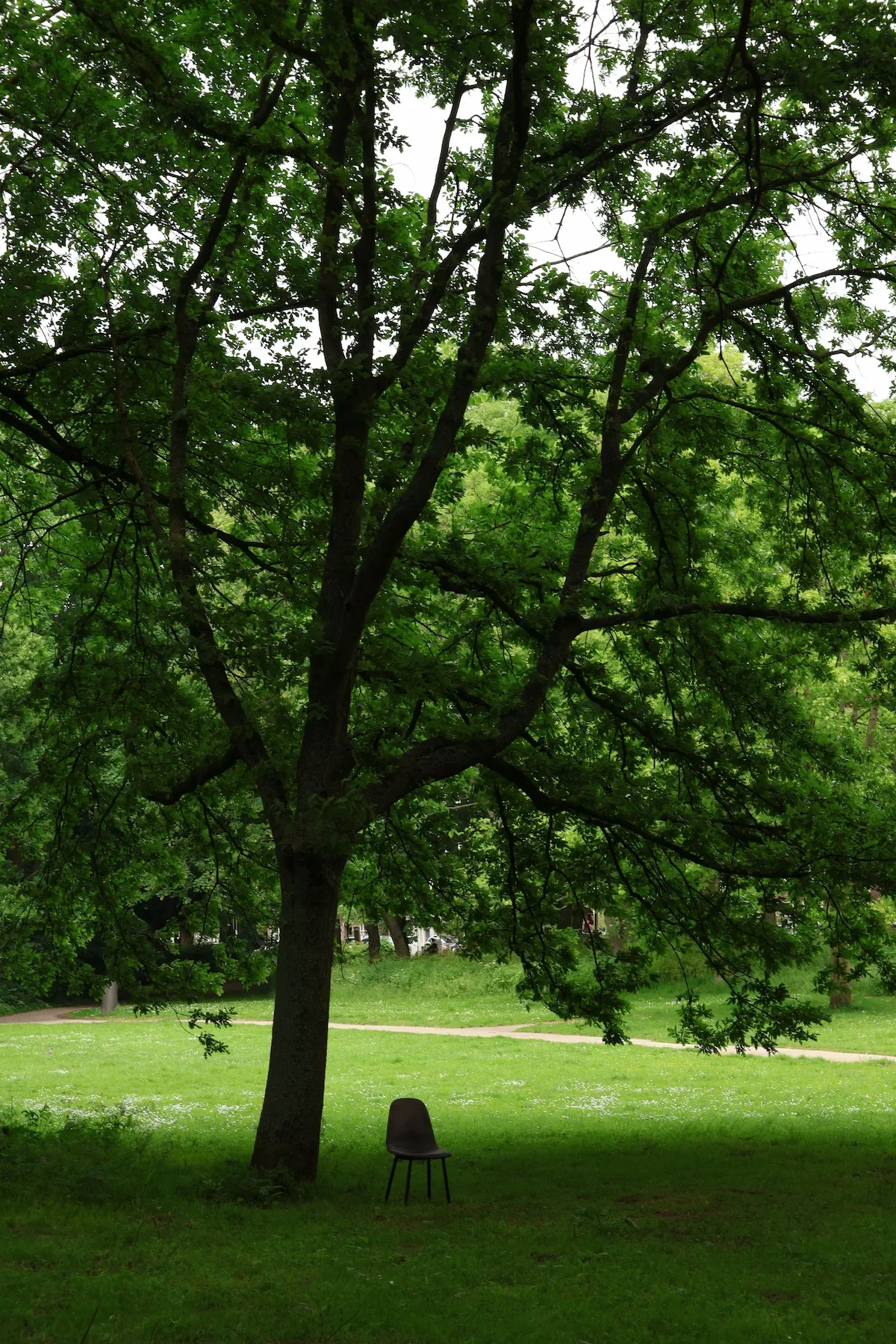
Lone chair beneath large tree open landscape Amsterdam fine art photography
What makes a photograph art
A photograph becomes art when it stops being a record and starts being a proposition. When the image does not show what was there but argues for a way of seeing it.
The distinction is visible in the choices the photographer makes before and during the moment of capture. Where to stand. What to include and what to exclude. When to wait and when to commit. Whether to work with the light or against it. These are not technical decisions. They are positions. Each one narrows the possible images until only one remains — the one the photographer was working toward, whether consciously or not.
The camera records. The artist decides what the recording means.
Consider Placed ,a chair beneath a large tree in an empty park. A documentary photograph of that scene captures the chair, the tree, the park. A fine art photograph of that scene asks why the chair is there, what it means that no one is sitting in it, what the relationship between the small human object and the large natural one tells us about presence and absence. The subject is the same. The proposition is entirely different.
This is also what distinguishes fine art photography from decorative photography. A decorative image asks: does this look good on a wall? A fine art image asks: does this change how you think? The guide to fine art photography vs poster covers how that distinction plays out in the objects themselves — in the materials, the edition, and what the collector is actually acquiring.

Amsterdam bicycles composition fine art photography
The moment of decision
Henri Cartier-Bresson described it as the decisive moment — the instant when form and content align into a single image that could not have been made a second earlier or later. What he was describing was not luck. It was the result of years of attention: learning to see relationships before they fully formed, to anticipate the moment when the world briefly arranged itself into meaning.
The photographers collected under the tradition of humanist photography understood the same principle. The decisive moment is not found. It is recognized, by someone who has trained themselves to know what they are looking for.
A photograph becomes art at the moment the photographer stops asking what is here and starts asking what this means.
This is why the same street, the same light, the same hour can produce a hundred forgettable images and one that holds. The difference is not in the conditions. It is in the intelligence brought to reading them. In the decision to wait rather than shoot, to move rather than stay, to frame the thing that is not quite visible yet rather than the thing that already is.
Or to find, in a narrow Venetian street, that the campanile visible between two buildings is not the tower everyone photographs from the piazza, but the one almost no one thinks to look for from below. That image is Found. The decision to look for it is the work.

Venetian campanile framed between narrow building facades fine art photography
How you recognize it
There is a practical test. Look at the image and ask: what would be lost if this had been taken from a different angle, at a different moment, with a different frame? If the answer is nothing — if any version of the image would have served equally well — it is a document. If the answer is everything — if the specific decision made by the specific photographer at the specific moment is what gives the image its meaning — it is a work.
When you look at a work of art, you are not seeing what the artist saw. You are seeing what the artist decided you should see.
Empty benches in a snow-covered park. No people, no action, no event. A photograph of that scene that works is not working because of what is there. It is working because of what is absent. The artist made a decision about absence — about what it means for a space designed for human presence to be without it. That decision is what separates the image from a weather photograph.
For collectors beginning to build a collection around this distinction, the guide to fine art photography prints explains what that intention looks like in the finished object: the archival materials, the limited edition, the documentation that records the work as a singular thing rather than a reproduction.
“I had photographs on my walls for years before I understood the difference. The ones I still look at are the ones that say something I haven’t finished hearing yet.” — E.M., New York
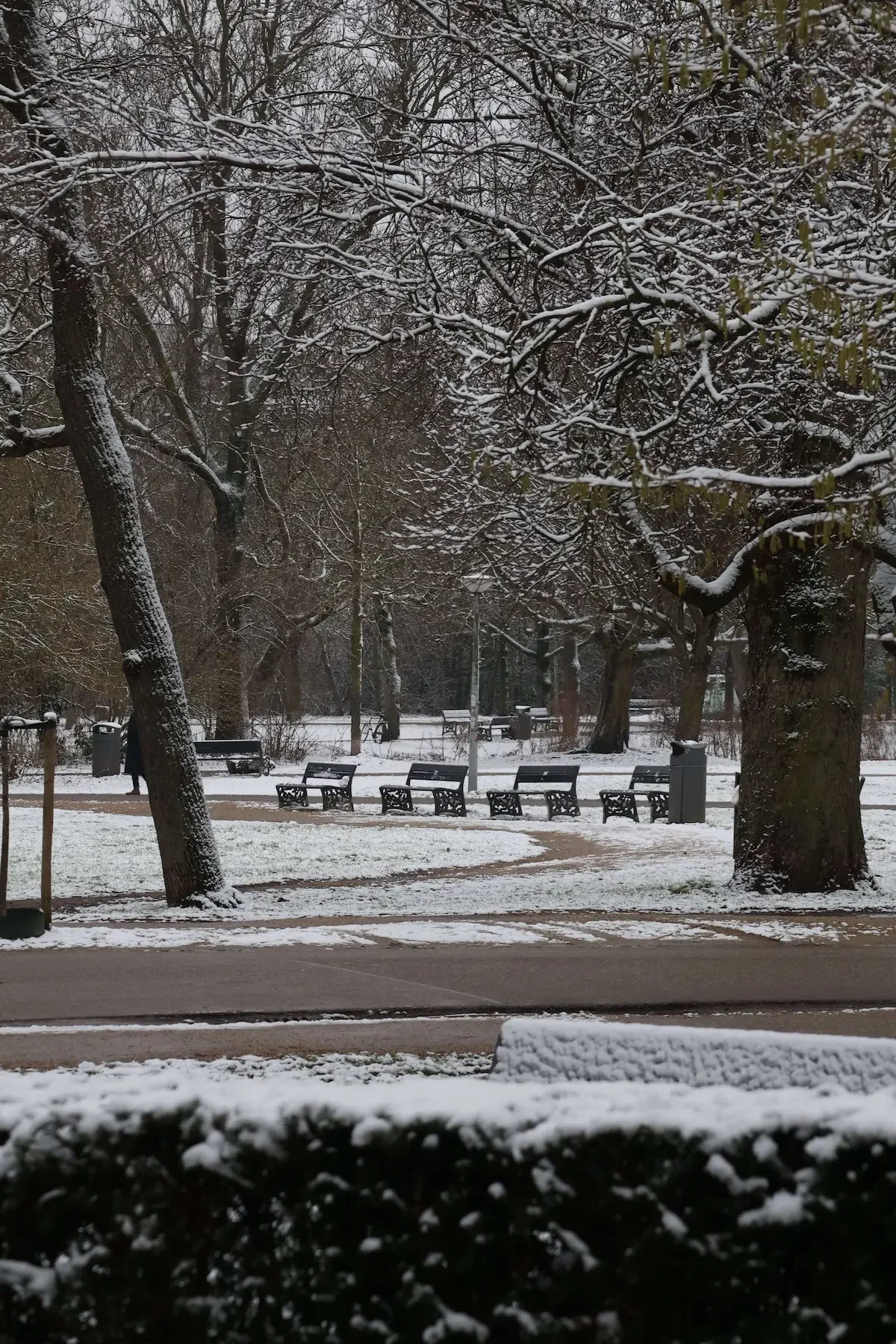
Empty benches snow winter park Amsterdam fine art photography absence
Frequently asked questions
Is photography considered an art form?
Yes. Photography has been established as a fine art form since the early twentieth century. It is exhibited in major museums, collected by institutions and private collectors, and valued by the same market that handles painting, sculpture, and works on paper. The question today is not whether photography can be art — it is whether a specific photograph is. That depends on intention, execution, and what the image proposes beyond documentation.
When does photography become art?
A photograph becomes art when the intention behind it shifts from documentation to proposition — when the photographer is no longer recording what is there but arguing for a way of seeing it. This shift is visible in the choices made before and during capture: where to stand, what to include, when to commit. The result is an image that could not have been made differently without losing its meaning. That specificity — the sense that every decision was the only possible decision — is the mark of a work rather than a document.
What is the difference between photography and art?
Photography is a medium. Art is an intention. A photograph made to document — to record an event, preserve a memory, illustrate an idea — is photography used as a tool. A photograph made to propose a way of seeing — to make the viewer feel something about the relationship between the elements in the frame — is photography used as art. The camera is the same. What changes is what the photographer was trying to do with it.
What makes a photograph fine art?
Intention, specificity, and edition. A fine art photograph is made with a clear artistic proposition — not to document or decorate, but to propose. It is produced on archival materials, issued in a limited edition, and accompanied by documentation that establishes its authenticity and singularity. The combination of these elements — artistic intention, archival production, defined scarcity — is what makes a photograph a collectible work.
Can photography be fine art?
Yes. Photography is one of the major fine art mediums, with a history of collected and exhibited work stretching back to the nineteenth century. Fine art photography is distinguished from other uses of the medium by its intention — to propose rather than document — and by its production: archival paper, limited edition, artist signature, and certificate of authenticity. A fine art photograph is not a reproduction of something. It is a singular work that exists in a fixed number of copies in the world.
The camera is the same. What changes is what the photographer decided to do with it.
Explore the collection
Or inquire about a specific work.
Every work is Edition of 5, hand-framed in Amsterdam. Leave your name and the title of the work — you’ll hear back within 24 hours with availability and a custom mockup for your space.
