
What Is Humanist Photography — And Why It Endures
What is humanist photography — and why it endures
There is a category of photography that has nothing to do with the spectacular. No disasters, no celebrities, no events that will appear in tomorrow's newspaper. Its subject is the ordinary — the person crossing a bridge at dawn, the worker at the end of a long night, two strangers sitting side by side in a city that does not notice them.
Humanist photography is the practice of finding meaning in that ordinariness. Not documenting it. Not illustrating it. Finding it — with the precision of composition, the patience of waiting, and the conviction that what happens in an unremarkable moment between unremarkable people is worth making permanent.
Humanist photography is not about people. It is about what people reveal without knowing it.
It is one of the most demanding disciplines within fine art photography — and one of the most enduring. The works that collectors return to decade after decade are rarely the dramatic ones. They are the ones that hold something quietly, that produce new readings each time, that seem to know something about the world they captured that the world itself did not know yet.
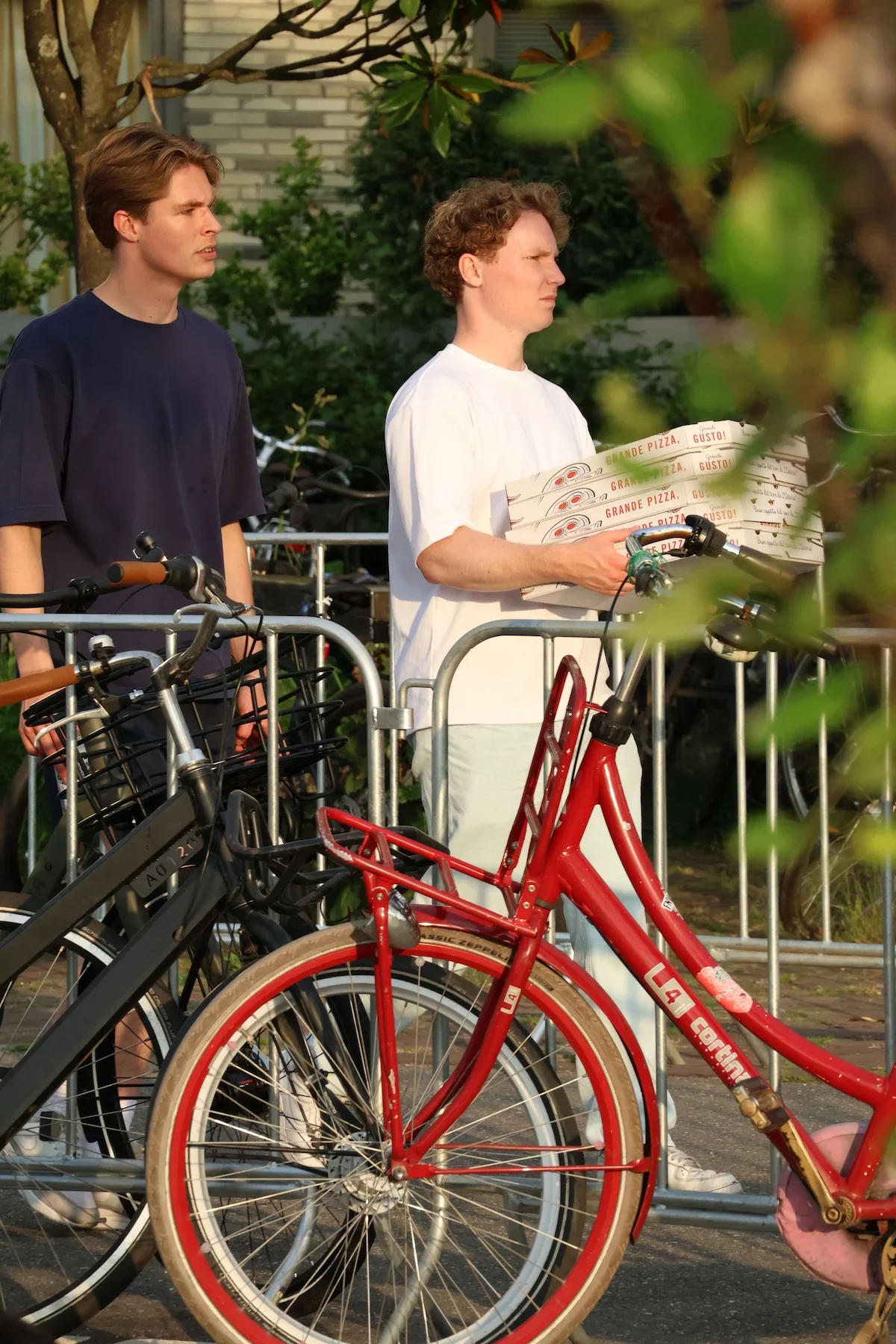
Two young men standing near bicycle rack in Amsterdam, one carrying pizza boxes, warm evening light filtering through trees. Candid urban moment, humanist fine art photography, edition of 5.
What is humanist photography — a definition
Humanist photography emerged as a distinct sensibility in mid-twentieth century Europe, centred on photographers who believed that the street — the market, the café, the canal, the ordinary corner — was the most important subject available. Henri Cartier-Bresson — whose concept of the decisive moment defined the genre — Willy Ronis — known for his intimate portraits of working-class Paris — and Robert Doisneau — whose photographs of everyday French life became some of the most collected images of the twentieth century — each approached it differently, but shared a common conviction: that dignity lived in the everyday, and that photography's highest function was to find it there.
The humanist photographer is not a witness to history. They are a witness to the moment before history — the moment that history will not record, that will pass without notice, that exists only in the fraction of a second the photographer chose to preserve it.
That choice — to stop, to frame, to wait — is the artistic act. The result is not a document. It is an interpretation. The photographer's position, the light they chose, the moment they selected from among all available moments — these are decisions, and they carry meaning.
Documentary photography records. Humanist photography interprets.
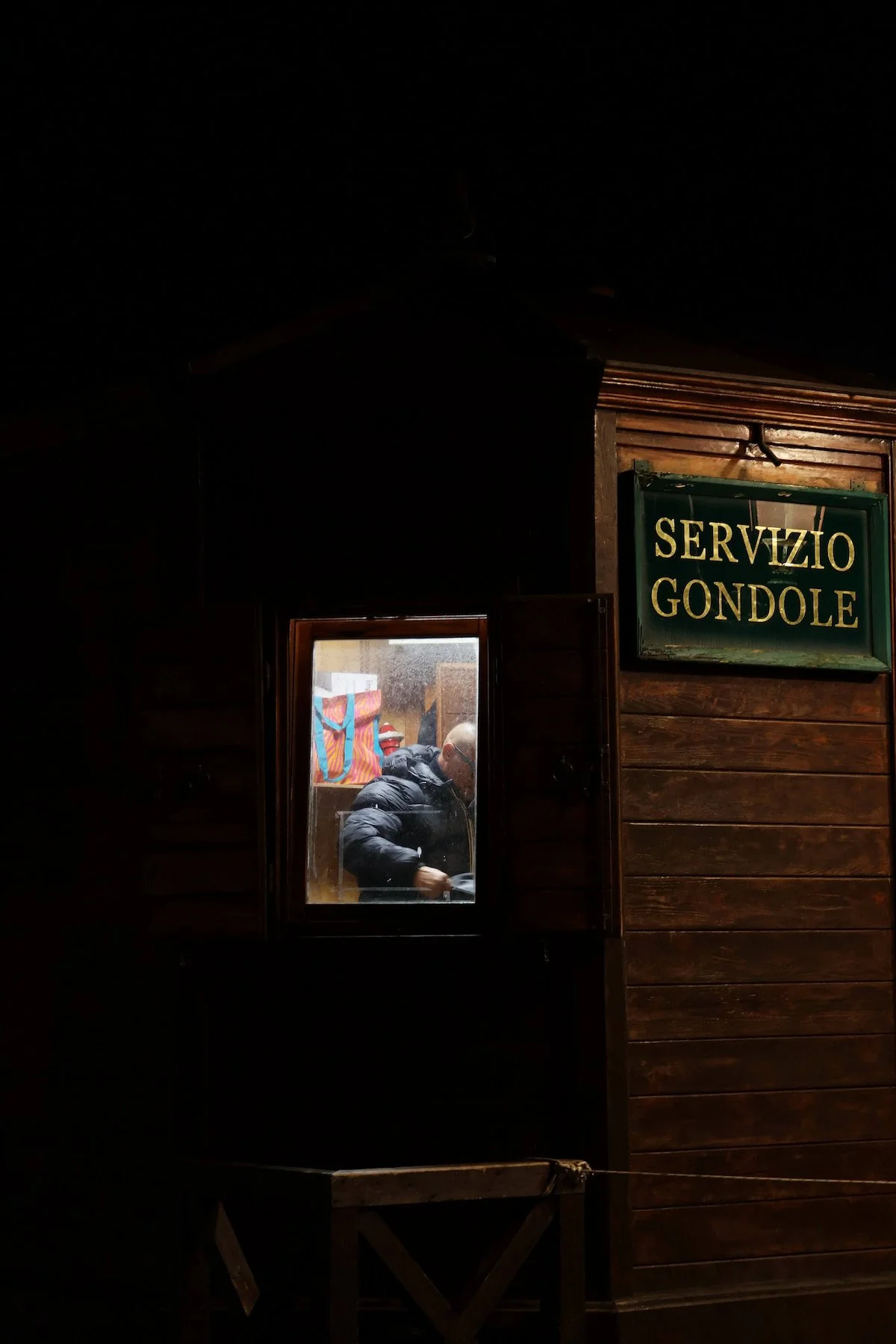
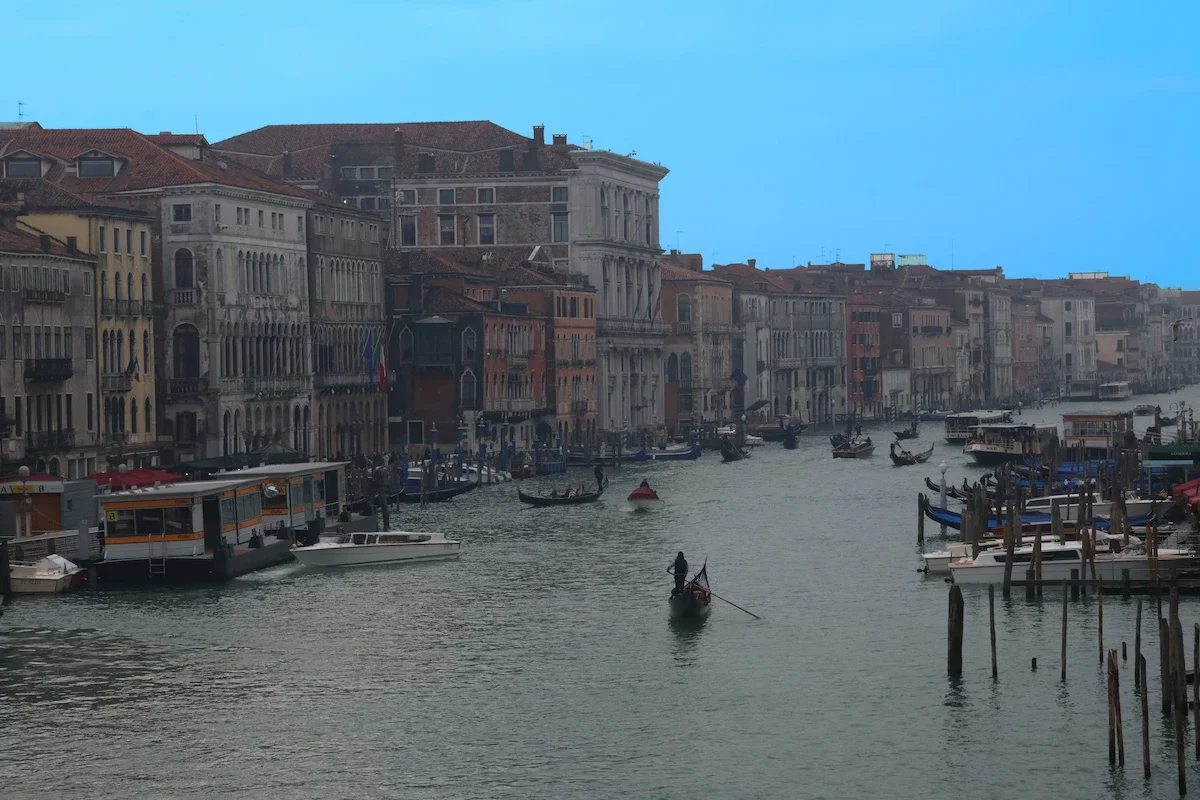
Solitary worker Venice canal at night warm light, humanist documentary fine art photography
Humanist photography versus documentary photography — what separates them
The distinction matters for collectors — and it is often misunderstood.
Documentary photography is made to record. Its authority comes from its fidelity to events — what happened, where, when, who was present. Its value is historical and journalistic. A documentary photograph is successful when it shows you something you could not otherwise have seen.
Humanist photography is made to interpret. Its authority comes from the photographer's eye — the decision to be in this place at this hour, to frame the scene this way, to wait for this particular arrangement of light and figure and shadow. A humanist photograph is successful when it shows you something you have always known but had not yet seen articulated.
The subject is incidental. What the photograph says about the human condition is not.
This is why humanist photographs endure beyond the moment they capture. A documentary photograph of a specific event is tied to that event — its meaning diminishes as the event recedes into history. A humanist photograph of an anonymous figure on a canal in Venice in the early hours is not tied to anything except what it observes about solitude, or labour, or the relationship between a person and the city that surrounds them. That observation does not age.
This is also what connects humanist photography to the tradition of fine art street photography — the street as the site where the human condition makes itself visible, briefly, to anyone paying attention.
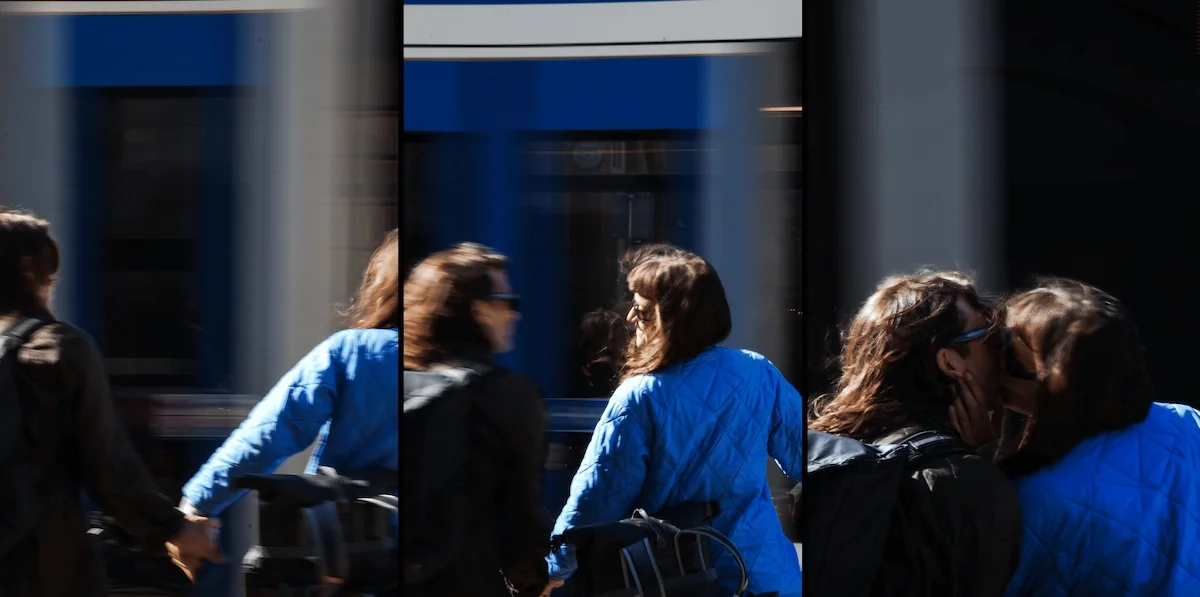
Two women meeting kissing Amsterdam tram passing urban moment, humanist fine art photography edition of 5
What makes a humanist photograph collectible
Not every humanist photograph is a collectible work. The same qualities that make it fine art apply here: a closed, numbered edition; archival materials; rigorous documentation. But there is something additional — a quality specific to humanist photography that determines whether a work will hold its meaning over decades.
Universality over specificity
The great humanist photographs are universal — they could have been made in a dozen cities, in a dozen decades, and their meaning would be the same. The setting is context, not subject. The figure crossing the bridge in Venice is not about Venice. It is about the act of crossing — the moment of transition, the solitude in motion, the city as backdrop to something private. A work that depends on its specific location for its meaning is a document. A work that uses its location to say something universal is art.
The decisive moment — made permanent
Henri Cartier-Bresson's concept of the decisive moment — the precise instant when form, content, and meaning align — is not a technique. It is a philosophy of attention. The humanist photographer does not manufacture the moment. They recognise it. The entire practice is a discipline of being present enough, still enough, and patient enough to be in the right place when the world arranges itself into meaning.
The decisive moment is not a technique. It is a philosophy of attention.
When that moment is made permanent — printed on archival paper, issued in a closed edition of 5, accompanied by a certificate of authenticity that records its specific place in the edition — it becomes an object with a different relationship to time than the moment it captured. The moment was gone in a fraction of a second. The work is made to outlast everything in the room it enters.
The figure and the space — in tension
The best humanist photographs hold a specific tension between the human figure and the space they inhabit. The figure is never dominant — the city, the light, the architecture continue around them, indifferent to their presence. And the figure is never entirely lost — they carry something specific, a particular weight or stillness or motion that the space alone could not produce.
That tension — between the specific and the indifferent, between the person and the world — is what makes humanist photography the most resonant genre for collectors who live in cities. The work confirms something they already know from moving through those spaces: that the city is indifferent, and that people are remarkable within that indifference.
A humanist photograph does not explain its subject. It holds space for the viewer to complete it.
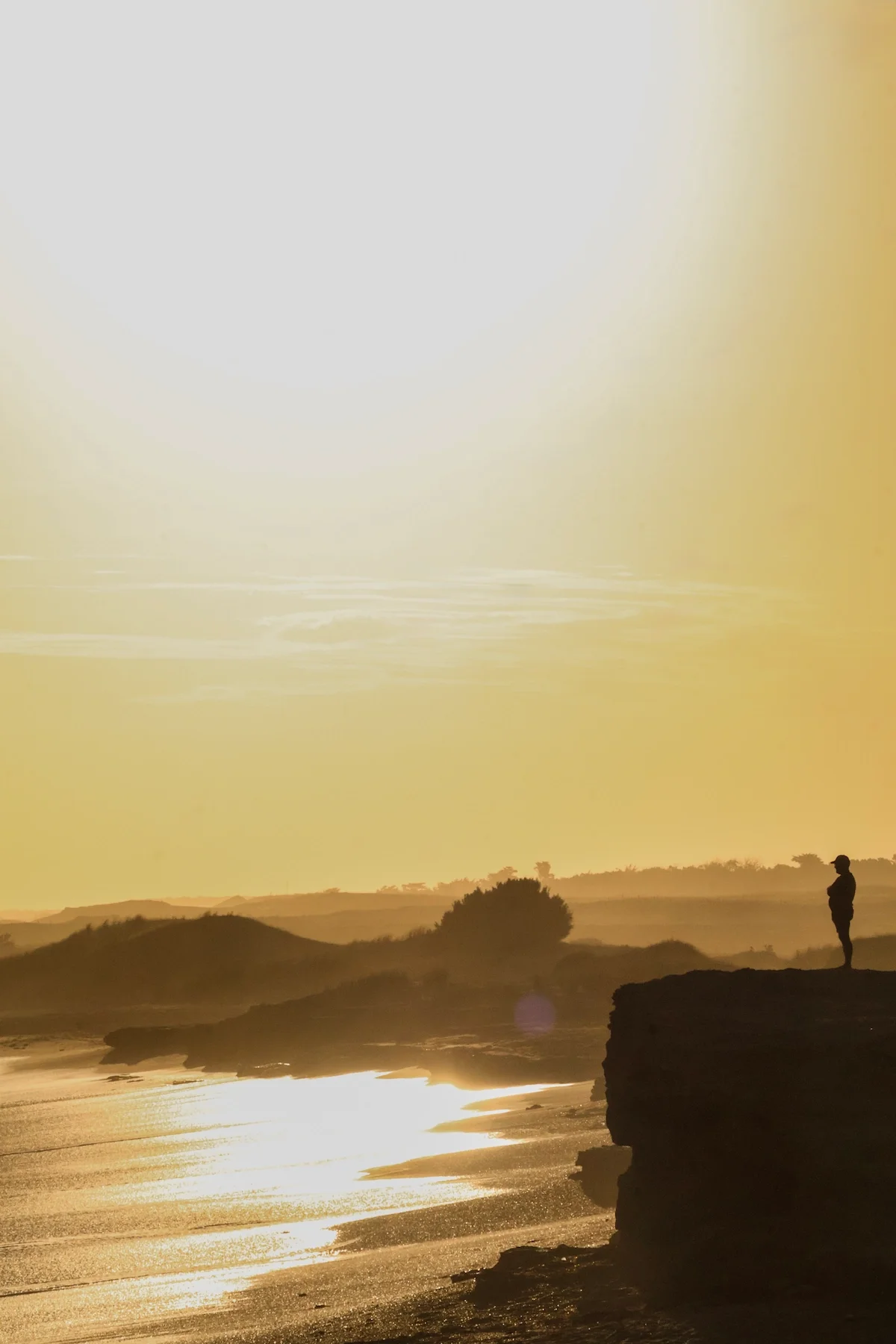
Single figure dwarfed by monumental architecture urban space, humanist fine art photography limited edition collectible
Humanist photography and the Pictelier collection
The works in the Pictelier collection are contemporary examples of the humanist tradition — not as a historical reference, but as a living practice. Amsterdam, Venice, Buenos Aires, Barcelona, Dublin: cities where the ordinary moment is dense with accumulated time, where the relationship between the figure and the space has been layered by centuries.
The works are not about those cities. They use those cities as the site where something more specific can be observed — the quality of a particular light at a particular hour, the relationship between two figures who do not know they are composing something, the solitude of a single person in a space designed for many.
Works like The Night Shift — a solitary worker at the end of a long night, Venice indifferent around him — or In Transit — two figures in Amsterdam, a private moment unfolding as the city moves around them — or Before Dinner — two people on an Amsterdam street, carrying something ordinary, the evening light catching what they do not notice — are examples of what the humanist tradition produces when it is applied with intention and documented with rigour.
Each work exists in an edition of 5. Each is hand-framed in Amsterdam before it ships. Each comes with a signed certificate. For a full understanding of what makes a fine art photography print collectible beyond its image, the guide to fine art photography prints covers every element.
"It took me a long time to understand why I kept returning to it. Then I realised — it wasn't the place. It was the feeling of being in a place alone." — H.R., London
Solitary figure Venice arcade slow pace, fine art humanist photography collectible print
Frequently asked questions
What is humanist photography?
Humanist photography is a photographic tradition centred on the ordinary moment — the street, the café, the canal, the anonymous figure in a city. It is defined not by its subject but by its position: the belief that dignity and meaning live in everyday life, and that photography's highest function is to find them there. Unlike documentary photography, which records events, humanist photography interprets moments. Its authority comes from the photographer's eye, not from the historical significance of what is shown.
What is the difference between documentary and fine art photography?
Documentary photography records — its authority comes from fidelity to events, and its value is historical or journalistic. Fine art photography, including the humanist tradition, interprets — its authority comes from the artistic decisions behind the image, and its value is aesthetic and conceptual. The same subject can produce both: a photograph of a street corner can document a moment in urban history, or it can say something about solitude, light, and the human condition that will hold meaning long after the specific moment has been forgotten.
Who are the great humanist photographers?
The tradition is rooted in mid-twentieth century Europe. Henri Cartier-Bresson, Willy Ronis, Robert Doisneau, Édouard Boubat, and Sabine Weiss are among the most significant figures. Each shared a conviction that the street was the most important subject available, and that the ordinary moment — observed with patience and precision — carried more meaning than any spectacular event. Their influence continues in contemporary fine art photography that works in the humanist tradition.
Is documentary photography fine art?
Documentary photography can be fine art when the artistic decisions behind the image — composition, timing, framing, the photographer's position — carry as much meaning as the subject being recorded. The distinction is not about the subject but about the intent: a work made primarily to record is documentary; a work made primarily to interpret and endure is fine art. Many of the most collectible photographs in history sit at the intersection of both traditions.
What makes a humanist photograph worth collecting?
Four things: universality — the image holds meaning beyond its specific time and place; a closed, documented edition that establishes scarcity; archival materials that ensure the work endures as long as its meaning; and the quality of the decisive moment — the sense that this specific fraction of a second could not have been different without losing everything the image holds. A humanist photograph that checks all four is a work that will still produce new readings in twenty years.
The humanist photograph is the oldest argument in photography: that the ordinary is the most important subject available. That argument has not aged. If anything, it has become more necessary — in a world that produces images at a rate that makes every individual image disposable, the photograph made with patience and intention, issued in a closed edition, documented and framed, is the photograph that survives.
The decisive moment passes in a fraction of a second. The print is made to outlast the room it enters.
Explore the works in the humanist tradition.
A work has caught your attention.
Leave your name and the title of the work. You'll hear back within 24 hours with availability, framing options, and a custom mockup for your space
